
Children’s rights are universal. Childhood is not.
Published: Nov 20, 2026 Reading time: 7 minutes Share: Share an articleEvery child has the right to learn, play, feel safe, be healthy, and be heard. Enshrined in the UN Convention on the Rights of the Child, these rights belong to all children, regardless of location or circumstance. Yet having and enjoying a right do not always overlap.
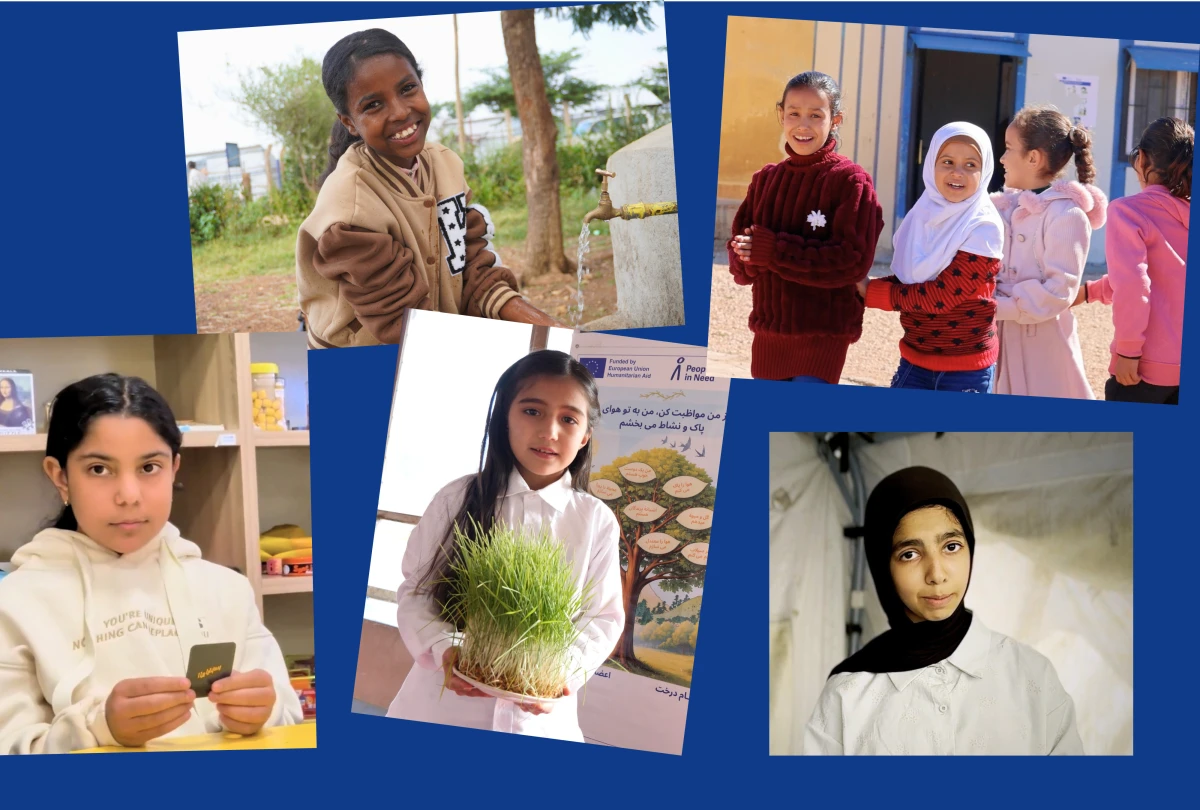
For some children, going to school, having clean water, or finding a safe place to play is part of everyday life. For others, these things are much harder to come by. Conflict, poverty, displacement, climate change, discrimination and social exclusion can prevent children from enjoying their rights.
From rights to reality
We work with children and their families all over the world. Their circumstances may vary, but much of our work has a common purpose: helping remove the barriers that prevent people, including children, from enjoying their rights. Whether through education, access to safe water, nutritious food or protection, our work is based on the fact that everyone has rights, dignity and a voice that deserves to be heard.
When we talk about children growing up in difficult circumstances, we often focus on what they lack or what they have experienced. But their lives are much fuller than the topics we discuss. They have personalities, interests, talents, friendships, ideas, and dreams. They also have views on the world around them and what they would like to change.
Childhood in their own words
This World Children’s Day, we want to hear from children themselves. What makes them happy? What matters to them? What do they enjoy learning? And what do they dream of?
Through their stories, you can see what children’s rights mean in everyday life, what can prevent children from enjoying them and how much children across the world have in common. A child’s life may vary by place and by circumstances, but their rights remain the same.
And who better to tell us about their lives than children themselves?
Afghanistan: Learning to care for the future
Years of conflict, poverty and the effects of climate change have made life difficult for many families in Afghanistan. Children lack access to education and protection services, while some are exposed to child labour and violence.
We have worked in Afghanistan for 25 years, supporting communities through education, protection, psychosocial support and other activities.
Ahead of World Children’s Day, we spoke with children attending our Community-Based Education (CBE) classes. These classes are funded by the European Union and supported by our partner SADA. CBE lessons go beyond reading and writing, they also teach children about the world around them and how to care for it.
Geeta talks about growing plants and looking after nature: “First, I planted and watered wheat, then planted a few chickpeas around it. I watered it every other day, now it has grown. We care for it so it can grow. Later, we will enjoy its fruit. We sit in its shade and eat its fruit.”
Her experience shows how education can help children develop not only knowledge and skills, but also curiosity and respect for the environment.
Syria: Growing up through years of displacement
Fourteen years of conflict in Syria have forced millions of families from their homes, often more than once. For children, displacement can also mean losing their school, friends, and familiar surroundings, and having to start again somewhere new.
“We were displaced in Salwah. However, there were no schools in the camp; it was completely devastated. Thankfully, PIN registered our children. I enrolled my son, and he truly benefited,” says Abdul Rahman’s mother.
When the family returned home, there were still not enough places available in local schools. To help children continue their education, the community relocated the caravans previously used as classrooms, while we helped establish a new Temporary Learning Centre and organise remedial classes in an area where displaced families were returning.
At one centre, which was established with European Union funds, Ruba, a young Syrian girl, continues to learn and work towards her dreams.
Gaza: The right to learn and be heard, even in times of war
War in Gaza has disrupted almost every aspect of children’s everyday lives. Almost all have been displaced from their homes, separated from familiar surroundings, and unable to attend school. Schools have been damaged or destroyed, leaving children without safe places to learn, spend time with friends, or experience some sense of normality.
Lama attends a Temporary Learning Spaces we support in partnership with AlNayzak, with funding from the SOS Gaza Emergency Appeal. She loves math and science.
Getting to school is not always easy. “There’s rubble on the roads and no transportation, but we still come,” Lama says.
One day, she hopes to become a teacher and share her knowledge with other children, just as her teachers do today. Her message to children is simple: “Don’t give up on your dreams, and keep learning.” And she has a message for the rest of the world, too: “I want to continue my education and achieve my dream.”
Armenia: The right to play
Eleven-year-old Anahit comes from Nagorno-Karabakh and has experienced displacement twice. Her family first fled to Armenia in 2020, before returning to Nagorno-Karabakh after the war. In 2023, they were forced to leave again. This time, they returned to the same Armenian village, where they had already made friends and built connections.
Today, Anahit attends a child-friendly space in the village of Malishka, which we established, and which is now supported by UNICEF. She enjoys playing games, painting and learning new things. She has also made friends with children from the host community. One day, she dreams of becoming an architect.
The space in Malishka is one of 11 child-friendly spaces we have supported in Armenia since 2020. These places offer children a safe place to play, learn and spend time together. They also bring displaced and host children together, helping them make friends and feel part of the same community.
Ethiopia: Education for all
Classrooms in parts of Ethiopia stood empty while children were forced to stay home as conflict and displacement pushed education beyond their reach. Prolonged insecurity has disrupted schooling for many. Some were out of school for one to two years, while others never enrolled at all.
Overcrowded classrooms, a lack of desks, and the absence of latrines made learning difficult—especially for younger children and girls.
Thanks to RISE (Resilient Inclusive Schooling in Ethiopia), our EU-funded initiative, we are supporting the restoration of education across five primary schools in East Wollega. From new desks to clean water, the community rebuilt not just a school, but a future for the next generation of doctors and engineers.
Combining support to meet children’s needs and protect their rights
Children are among the most vulnerable people affected by conflict and natural disasters. Losing homes, schools, and the sense of safety, experiencing prolonged stress, or facing malnutrition and limited healthcare can have lasting effects on their physical and mental wellbeing.
In supporting children, we don’t just attend to their immediate needs during crisis. We also consider their future.

One of our main priorities is to ensure that children can have quality education and continue to learn, even in difficult circumstances. Schools are more than places to learn. They are also places where children make friends, find stability, and develop socially and emotionally.
But children need to feel safe and have their basic needs met. That is why we combine various types of support. Alongside education programmes, including school repairs, equipment, and support for teachers and students, we help provide access to safe drinking water, hygiene and sanitation, nutrition assistance, psychosocial support, and protection services.
We also work with families and communities to create safe environments where children have more opportunities to learn, grow, and enjoy their rights.
Helping 425,000 children learn, grow, and feel safe
In 2025, we supported 425,000 children through these activities, including 184,197 children reached through education programmes in 417 schools and learning centres.
Over the past 25 years, through our Education in Emergencies programmes alone, we have supported more than 1.2 million children and 5,467 education spaces across 30 countries. We have also rehabilitated 1,501 education spaces in 21 countries and supported 36,588 teachers and 21,246 parents and caregivers, helping children to continue to learn, grow, and feel safe, even in times of crisis.


