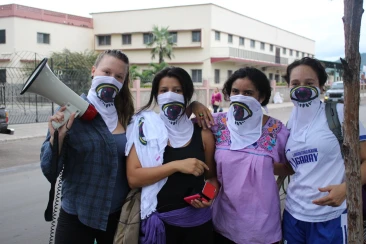
Civil Society & Inclusive Governance

Civil Society & Inclusive Governance

© Photo: Shushanik Nersesyan

We support civil society to play a key role in social, economic, and democratic development in our target countries. We provide opportunities for civil society actors to develop the technical skills and mechanisms to become more effective governance and development actors.

We support civil society to engage with government actors to advance participatory democratic processes and develop inclusive public services. Specifically, our work targets a range of civil society actors, including youth and those representing marginalised communities, to ensure that government policies and services represent their needs. In parallel, we promote active citizenship, empowering individuals to exercise their rights, engage in democratic processes, and hold government officials accountable.

Our main areas of focus:

Empowerment of Civil Society Actors: Locally-driven, adaptive approaches to support the organisational and technical development of civil society, including civil society organisations, informal civic groups and grassroots activists. In our civil society development programming, we coordinate and—wherever possible—share expertise with our Center for Human Rights and Democracy.

Youth Civic Engagement: The One World in Schools youth civic education and media literacy programming runs contextualised content adapted for formal and non-formal educational spaces and learners of all ages.

Inclusive Governance of Public Services: Participatory development and monitoring public services, including Social Services, Education, Water, Sanitation and Public Health.

Entire text Less text

Our main areas of focus

Empowerment of Civil Society Actors

Youth Civic Engagement

Inclusive Governance of Public Services

Areas of our work with this pillar

Afghanistan Albania United Arab Emirates Armenia Austria Burundi Belgium Benin Burkina Faso Bangladesh Bulgaria Bosnia and Herzegovina Belarus Belize Bolivia (Plurinational State of) Brazil Brunei Darussalam Bhutan Botswana Central African Republic Switzerland Ivory Coast Cameroon Congo (Democratic Republic of the) Congo Colombia Costa Rica Cuba Czech Republic Germany Djibouti Dominican Republic Algeria Ecuador Egypt Eritrea Estonia Ethiopia Finland Gabon Georgia Ghana Guinea Gambia Guinea-Bissau Equatorial Guinea Greenland Guatemala Guyana Honduras Croatia Haiti Hungary India Ireland Iran (Islamic Republic of) Iraq Iceland Israel Jamaica Jordan Kazakhstan Kenya Kyrgyzstan Cambodia Korea (Republic of) Kuwait Lao People's Democratic Republic Lebanon Liberia Libya Sri Lanka Lesotho Lithuania Luxembourg Latvia Morocco Moldova (Republic of) Madagascar Mexico North Macedonia Mali Myanmar Montenegro Mongolia Mozambique Mauritania Malawi Namibia Niger Nigeria Nicaragua Nepal Pakistan Panama Peru Poland Korea (Democratic People's Republic of) Paraguay Palestine, State of Qatar Romania Rwanda Western Sahara Saudi Arabia Sudan South Sudan Senegal Sierra Leone El Salvador Serbia Suriname Slovakia Slovenia Sweden Swaziland Syrian Arab Republic Chad Togo Thailand Tajikistan Turkmenistan Timor-Leste Tunisia Taiwan Tanzania, United Republic of Uganda Ukrajina Uruguay Uzbekistan Venezuela (Bolivarian Republic of) Vietnam Yemen Zambia Zimbabwe Somalia Republic of Kosovo South Africa Netherlands Portugal Spain French Guiana Aruba Anguilla Bahrain Saint Barthélemy Bermuda Barbados Curaçao Dominica Grenada Guam Saint Lucia Saint Martin (French part) Maldives Marshall Islands Montserrat Nauru Palau Sint Maarten (Dutch part) Tuvalu Saint Vincent and the Grenadines Virgin Islands (British) Martinique Mayotte Réunion

Afghanistan

Burma/Myanmar

Cambodia

Czech Republic

DR Congo

Ethiopia

Georgia

Nepal

Philippines

Serbia

Sri Lanka

Sudan (Darfur)

Syria

Türkiye

Contact us

Richard Walker

Richard Walker

Institutional Relations Director