
EU grants of €268,225 support Zambia’s local civil society
Published: Nov 25, 2026 Reading time: 6 minutes Share: Share an articleFrom child justice in Lusaka to youth health services in Chongwe, organisations that completed training through the LEADs project are now putting their skills into practice.
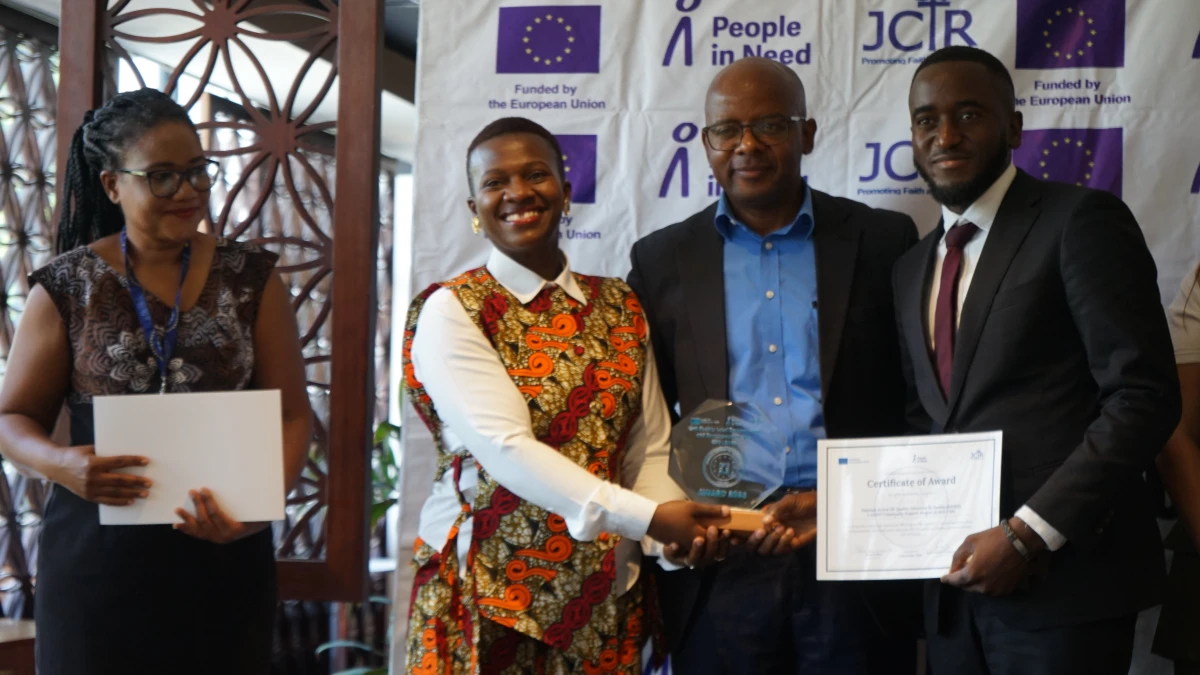
People in Need (PIN) and the Jesuit Centre for Theological Reflection (JCTR) have awarded €268,225 (approximately ZMW 6.1 million) in grants to local civil society organisations (CSOs) and networks in Zambia. Funded by the European Union (EU), the grants will support research, advocacy and joint action with public authorities on issues ranging from child justice to access to health services.
The grants are part of the Financial Support to Third Parties (FSTP) component of Local Empowerment and Development – Civil Society LEADs, a three-year EU-funded project. They are awarded to organisations that have completed LEADs training in governance, financial management, and advocacy. The aim is to help organisations apply their knowledge and skills in practice.
The grants were awarded through three schemes:
- €148,225 (approximately ZMW 3.4 million) for monitoring, policy engagement and advocacy, shared among 12 CSOs and networks.
- €75,500 (approximately ZMW 1.7 million) for research to support evidence-based advocacy, shared among 13 organisations.
- €44,500 (approximately ZMW 1 million) for joint coordination and dialogue, shared among six consortia of CSOs and networks.
All kwacha equivalents are approximate, calculated at an exchange rate of ZMW 22.8 to €1.

What the grants will support
In Chongwe, the Youth Movement for HIV/TB/SRHR Advocacy in Zambia will survey 120 young people, including young women, young people living with HIV and young people with disabilities. The organisation will compare their experiences with assessments from 20 health providers.
Based on the findings, it will advocate for a youth-friendly space at Chongwe District Hospital. It will also work to ensure that young people are represented in decisions about Constituency Development Fund projects across four wards in Zambia.
In Chelstone, Kanyama and Chawama in Lusaka, the Treatment Advocacy and Literacy Campaign will use community scorecards to assess HIV services at three health facilities. It will present the findings to hospital management and district health authorities and monitor their responses.
Also in Lusaka, Children’s Future Society and Women Environs in Zambia will focus on child justice. They will convene correctional officers, social welfare staff, police, and CSOs to clarify responsibilities for family engagement, education, and preparing children in conflict with the law for reintegration. They will also follow up on commitments made by the relevant authorities.
For Children’s Future Society, a grassroots organisation, being selected for the LEADs programme was already a milestone, said Dorothy Nkoma, its Executive Director. After strengthening its organisational capacity through the programme, receiving a grant was particularly significant. She said the award had boosted the organisation’s confidence to continue its work.

Support that continues beyond training
LEADs is implemented by PIN in partnership with JCTR across Luapula, Lusaka, North-Western, Southern and Western provinces. Over 36 months, the project works with 31 CSOs and eight CSO networks. Each organisation begins with an assessment of its existing capacities, with support tailored to its needs.
The aim was to go beyond traditional training, said Stefania Lagonigro, Country Director of People in Need Zambia.
“When we designed LEADs, we wanted to go beyond traditional capacity strengthening,” she said. “We wanted organisations to have the opportunity not only to learn, but also to act.”
The approach reflects findings from an assessment of Zambia’s civil society sector. Focus group discussions with seven leading CSO networks and 15 stakeholder interviews highlighted limited coordination among CSOs and few opportunities for constructive dialogue with decision-makers.
The assessment also found that previous organisational development initiatives often fell short because they were based on short-term projects and followed a one-size-fits-all approach.
The grants were awarded through open calls with published guidelines and eligibility criteria. Only organisations that had completed the relevant training could apply.
A committee comprising representatives of PIN, JCTR and external experts assessed applications against published criteria. These included value for money and the participation of women, young people and marginalised groups.
Grant recipients will receive mentoring and monitoring support. They will also report on their activities and expenditure.
Ms Horno Comet told the grant recipients that they had been selected through “a competitive, open, and transparent process”. She encouraged them to work with excellence, integrity and transparency, ensure inclusion and continue collaborating.
Why direct funding matters
Direct funding for local civil society organisations remains uncommon. The OECD's 2025 Practical Guidelines for Supporting Locally Led Development describe direct funding to local non-state actors, including community-based, women's rights and grassroots organisations, as marginal. Most development assistance still passes through international intermediaries or governments.
A 2024 review by the Shift the Power Movement, cited by the OECD, found that more than 90% of civil society support from ten major donors went to organisations based in donor countries.
In Zambia, the EU's earlier Country Roadmap for Engagement with Civil Society (2021–2024) noted a steady decline in funding for civil society since the country became a middle-income country in 2011. It also found that CSOs were more visible in policy engagement at the national level than in other parts of the country.
The successor roadmap for 2026–2028, published in April 2026, aims to establish civil society as a “co-creator of sustainable development”. It identifies democratic governance, human rights, and civic space as priorities, alongside inclusive and legitimate dialogue as a cross-cutting priority.
The Ministry of Community Development and Social Services was represented at the grant award event by Aaron Kamalondo, Acting Director for Community Development. He attended on behalf of Permanent Secretary Beatrice Chilomo.
Ms Lagonigro thanked the Ministry for its participation, saying its presence demonstrated the government's recognition of the importance of working with civil society. She also described CSOs and communities as drivers of the Grow Zambia Agenda.
What happens next
Grant recipients will begin their activities following the awards. Each grant is expected to run for approximately six months.
Research findings, policy briefs and lessons learned will be shared through the Civil Society Now library, a digital learning platform developed by PIN UK and adapted for Zambia. They will also be shared through media campaigns and national workshops.
“What excites me most is not the amount of funding, but what this funding makes possible,” Ms Lagonigro said.
She highlighted the potential for research to inform national policies, joint initiatives involving CSOs, government, the private sector and the media, and stronger connections between organisations.
About the project
Local Empowerment and Development – Civil Society LEADs is a 36-month project funded by the European Union under the call Supporting Civil Society and Environmental Rights in Zambia (Lot 1). PIN implements the project in partnership with the Jesuit Centre for Theological Reflection, with PIN UK supporting the Civil Society Now platform. The project strengthens the organisational capacities of CSOs and networks representing women, young people and marginalised groups. It aims to support their participation in policy dialogue, public sector governance and local development.
Sources:
- EU Civil Society Roadmap 2026–2028, Zambia (EEAS, April 2026)
- EU Country Roadmap for Engagement with Civil Society in Zambia, 2021–2024 (EU Delegation to Zambia)
- OECD, Practical Guidelines for Supporting Locally Led Development (2025)
- OECD, Pathways Towards Effective Locally Led Development Co-operation (citing Shift the Power Movement, 2024)


