
Empowering youth to lead peacebuilding in Iraq
Published: Oct 13, 2026 Reading time: 3 minutes Share: Share an articleIn Iraq, young people, under 25 years old, make between 50 and 60 per cent of the population, yet many face limited opportunities to shape their communities. Years of conflict, political instability, and economic challenges have impacted infrastructure and livelihoods, and narrowed the space for youth engagement in civic life.
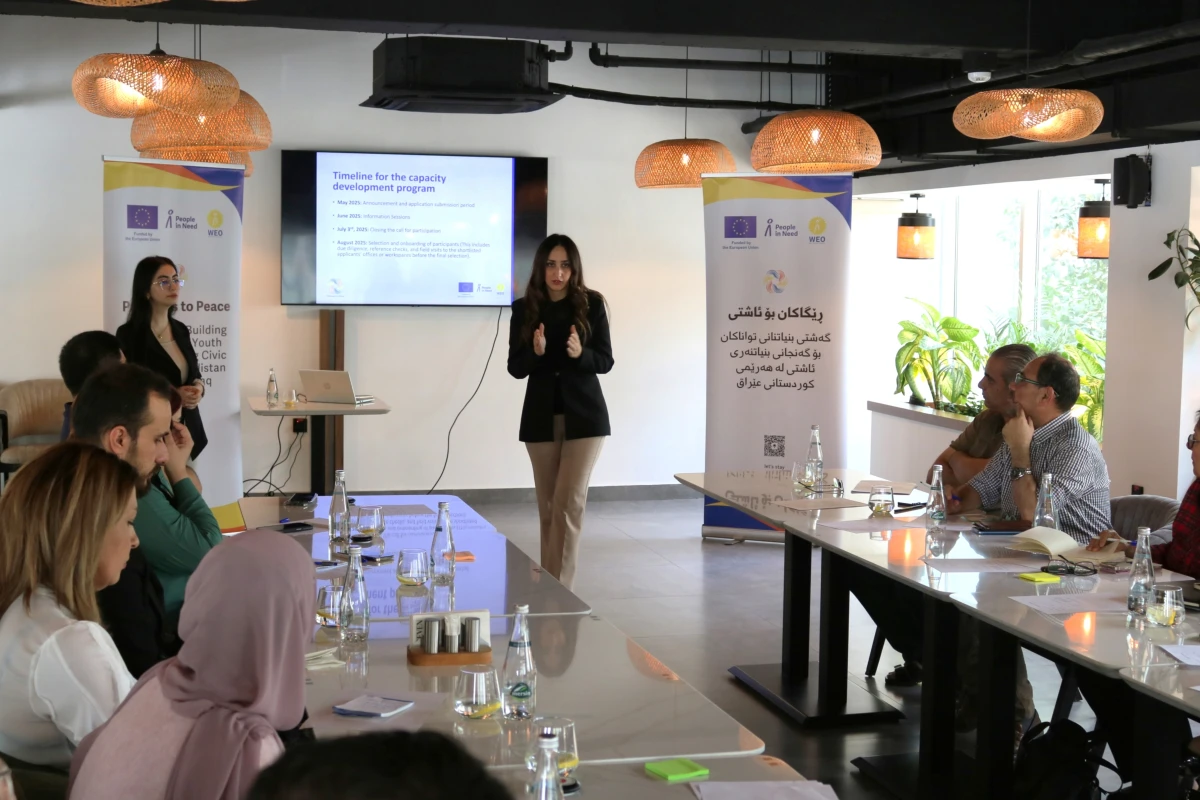
In the Kurdistan Region of Iraq (KRI), young people often lack access to the resources, funding, networks, and institutional support needed to contribute to peacebuilding. Youth-led organisations exist across the region. Whilst driven by passion and commitment, many operate with limited structures, insufficient funding, and without the technical capacity required to grow and sustain their efforts.
For young women and marginalised groups, these barriers are even more pronounced. Through restrictive social norms, women and marginalised groups have even fewer opportunities to participate in decision-making processes. As a result, a generation full of potential remains underrepresented in addressing the very challenges they experience daily.
In response, our Pathways to Peace (P2P) project, implemented in partnership with the Women Empowerment Organization (WEO) and funded by the European Union, is strengthening youth-led civil society organisations in becoming capable actors in peacebuilding, conflict prevention, and social cohesion.
From passion to capacity
Across Erbil, Duhok, Sulaymaniyah, and Halabja, 33 youth-led organisations, joined the project to create positive change in their communities.
While their motivation was strong, many of these organisations faced common challenges: limited organisational structures, gaps in financial and project management skills, and a lack of long-term strategic planning. These challenges often prevented them from accessing funding and expanding their work.

More than 100 young people took part in in-person training workshops designed to meet their specific needs. The workshops covered areas such as organisational governance, leadership, project cycle management, financial systems, and conflict-sensitive approaches.
Rather than theoretical learning, the training provided practical tools that participants could immediately apply within their organisations. For many, it was the first time they developed structured plans, clear roles, and internal systems to support sustainable growth.
At the same time, the training spaces encouraged peer exchange and collaboration, allowing young people from different backgrounds and governorates to connect, share experiences, and learn from one another. These interactions laid the foundation for future cooperation and stronger networks across the region.
Strengthening internal capacity enables young people to see themselves as leaders and contributors to peace processes.
As the project moves forward, they will implement their own peacebuilding and social cohesion activities through Financial Support to Third Parties (FSTP), directly benefiting their communities. At the same time, the knowledge and systems they have built will allow them to continue their work beyond the project, securing additional support and expanding their reach.
Financial Support to Third Parties (FSTP), totalling over €154,000 (19.5% of the total budget) will strengthen national youth-led civil society actors in their efforts to prevent conflict and promote inclusive and gender-sensitive peace dialogue.

The Pathways to Peace project is also creating a pathway for youth to become more active in shaping Iraq’s future.
By investing in their skills, confidence, and networks, we are supporting a generation that is ready to move from participation to leadership, from ideas to action, and from challenges to solutions.


