
How we manage our finances
Do you want to know what our budget is, what financial resources we work with and how much money we spend on each sector of aid? The charts below will give you a basic overview of our financial resources and our budget for 2025. The charts are always accompanied by a description of how we have used the funds raised.
For a full overview of all financial resources and budgets, please see our annual reports. You can also find more detailed information in our report in the IATI data standard containing our organisation's humanitarian aid and development cooperation activities.
Audited financial data for the previous year is updated in June of the following year with the annual report.
Table of ContentsHow we used the funds (€167 m)
Our revenues (€167.3 m)
How we used the funds (€167 million)
In 2024, our total costs amounted to €167,222,858. We spent most on humanitarian aid and development, followed by social work and counselling, human rights programmes and education. Approximately 9.9% of total costs were spent on support, central operation, property management, fundraising, donor care and other operational activities.
For the complete information on the use of our funds and on our work, please see our annual report.
Humanitarian and development aid (€120.1 million)
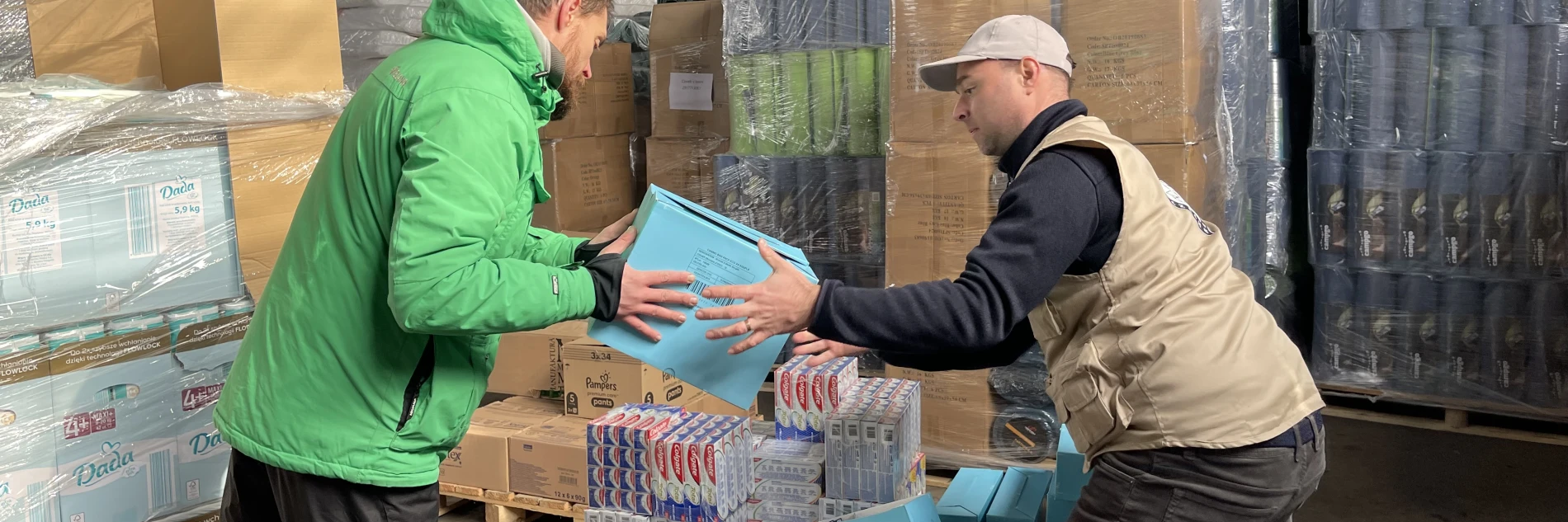
In 2025, we provided humanitarian aid in the world’s major conflicts, such as Gaza, Sudan, Ukraine and the Democratic Republic of the Congo, often in hard-to-reach areas and always in collaboration with a growing network of local and international partners.
We delivered 642,856 monthly food rations and provided prevention and treatment for malnutrition to 368,217 children and mothers. We provided direct financial assistance worth €30.6 million to 289,907 people. We ensured access to drinking water for 669,093 people and improved their hygiene and sanitation.
Read more examples of how we have provided assistance in different regions and countries.
In Europe, the bulk of our aid continued to be directed towards Ukraine, where humanitarian needs were intensifying not only in areas along the front line but also in major regional centres. In collaboration with local partner organisations and authorities, we provided emergency aid to refugees, supported access to essential services and, at the same time, invested in the reconstruction of affected areas.
We provided immediate assistance to people fleeing the conflict in Syria, including financial support to cover urgent personal needs and the purchase of food. Families at risk of malnutrition also received a grant to buy nutritious fresh food.
In Gaza, together with our partners, we focused on preventing and treating malnutrition, ensuring access to drinking water and sanitation, and providing psychological first aid to children and their families facing long-term trauma.
In Iraq, we helped to improve the quality of education and provided psychosocial support to children and their families.
In remote and hard-to-reach areas of South Kivu province in the Democratic Republic of the Congo, we provided food aid and access to safe drinking water and sanitation to people fleeing the war, supported health centres, and ensured the prevention and treatment of malnutrition.
In Afghanistan, we provided direct financial assistance to the most vulnerable families so that they could buy food, warm clothing or repair their damaged homes. Together with local communities, we repaired wells, water distribution systems and traditional water channels, rebuilt schools and supported village one-room schools, which primarily serve girls.
The individual expenditures are quantified in the chart below:
Human rights (€7.7 million)
Every year, we help human rights defenders and other people at risk to reach safety, including by relocating them to another country. Thanks to the support of donors, companies and institutions, we have been able to expand our assistance and take on cases from organisations that were no longer able to provide it.
In Ukraine, we support independent media through grants and training. In Moldova, we supported investigative media outlets which, in the run-up to the elections, exposed Russia’s attempts to influence the outcome.
We also assist organisations in countries where pro-democracy voices are being silenced and persecuted. In 2025, we awarded more than 200 grants to organisations affected by the suspension of US funding.
Here are Human Rights Department activities for 2025 (click to expand for a better view):

In 2025, we provided direct protection – legal, medical, psychosocial, financial and relocation support – to 1,179 people.
Through study visits, training courses and seminars, we helped a further 855 individuals.
We organised 23 film screenings, panel discussions, festivals and other advocacy events.
We also awarded 228 grants.
Social work and Counselling in the Czech Republic (€11.8 million)
We provided debt counselling in 13 regions of the Czech Republic, and in 7 regions we also provided social services and other programmes.
Our outreach, social and debt advisers worked on a long-term basis with more than 13,500 individuals and families from the Czech Republic.
We provided basic, one-off advice on an anonymous basis to a further 25,200 people.
20,000 people contacted the debt helpline, whilst 4,885 people contacted the helpline for refugees.
We helped a further 3,125 individuals or families as part of our support for Ukrainian refugees.
We help Ukrainian refugees
We have supported 3,125 Ukrainian refugees across eight regions. We have provided basic, one-off advice on an anonymous basis to a further 3,700 people. Through our nationwide helpline, we have provided information and dealt with enquiries from 4,885 people.
Education and Awareness in the Czech Republic (€4.9 million)
Our audiovisual lessons from the One World in Schools portal are now part of the curriculum at more than three-quarters of Czech primary and secondary schools.
Last year, more than 2,200 Czech children and young people (including Roma) received education and personal development support from us in the Czech Republic. The results? Improved grades, admission into secondary schools, and success in school-leaving exams and state examinations.
In addressing a wide range of topics and challenges, we provided support through nearly 700 supervision sessions to over 900 teachers, mostly on multiple occasions. Our online courses had 3,265 graduates, and 1,590 participants took part in 57 educational events.
The 27th edition of the One World Human Rights Film Festival in 2025 took place in a record 57 towns and cities and attracted over 122,000 filmgoers.
This is what the One World Human Rights Film Festival looked like last year:
We welcomed 12 new schools to the World Schools programme. The total number of schools in the programme – on which we collaborate with the organisations ARPOK and ADRA, and which focuses on supporting work on global issues – has thus risen to 149.
A computer collection drive provided children and young people with 480 pieces of equipment.
We provided tutoring for 1,050 children and teenagers and organised educational leisure activities for them.
Our revenues (€167.3 million)
Our main sources of income included funds from the EU, foreign governments and UN agencies, the state budget of the Czech Republic and donations from individuals and companies. In 2025, we received a total of €167,336,069 from these sources.
Types of income
Foreign government funds
In recent years, the most significant contributions to our budget have come from foreign governments, and sources redistributed following their guidelines by foundations and professional entities. This group includes the United States Agency for International Development USAID, the British Foreign Office and Commonwealth FCDO and the Swiss, Canadian, and German governments, among others.
EU funds
European Union funds also provide a substantial part of our budget. These resources include funds directly from the EU funds and funds gathered via implementing agencies such as DG ECHO, DG INTPA, etc.
UN agencies
We have long-term cooperation established with most United Nations agencies, particularly UNOCHA – United Nations Office for the Coordination of Humanitarian Affairs, UNICEF – United Nations Children’s Fund, UNDP – United Nations Development Programme and UNESCO – United Nations Educational, Scientific and Cultural Organisation.
Income from individuals and companies
This group includes the revenues of public fundraising campaigns and donations from individuals and companies.
Funds from the Czech Government and from self-governing authorities
This group of sources includes subsidies and public commissions from all entities that redistribute funds within the Czech Republic, including contributions from local self-governing authorities.
Own revenue
Our own revenue represents the profit from the organisation’s activities, including exchange rate revenue, insurance pay-outs, revenue from the sale of the organisation’s own products, revenue from the One World film festival, revenue from the Langhans Centre, etc.
Foundations and non-governmental organisations
We have established long-term cooperation with numerous foundations and large non-profit organisations in the Czech Republic and abroad. The most important entities that finance particular projects include ACTED, the Charles Stewart Mott Foundation and the GCP Foundation.