
Helping people in Nepal cope with flood trauma and preparing new early warning systems
Published: Sep 15, 2026 Reading time: 4 minutes Share: Share an articleIt has now been more than two weeks since the devastating flash floods struck Nepal. According to official sources, 1,385 people have lost their lives, and thousands more remain missing. In total, the disaster has affected up to 1.6 million people across five districts. We have been actively helping in the country since the first days, and continue to support people in the worst-affected areas of Uttargaya and Gosaikunda in Rasuwa district. Our Emergency Response Team currently has 14 members deployed on the ground. In addition to distributing material and financial aid and covering basic needs, we are now also providing psychosocial support to affected residents and frontline workers. Together with the authorities, we are working on improved early warning systems for natural disasters.
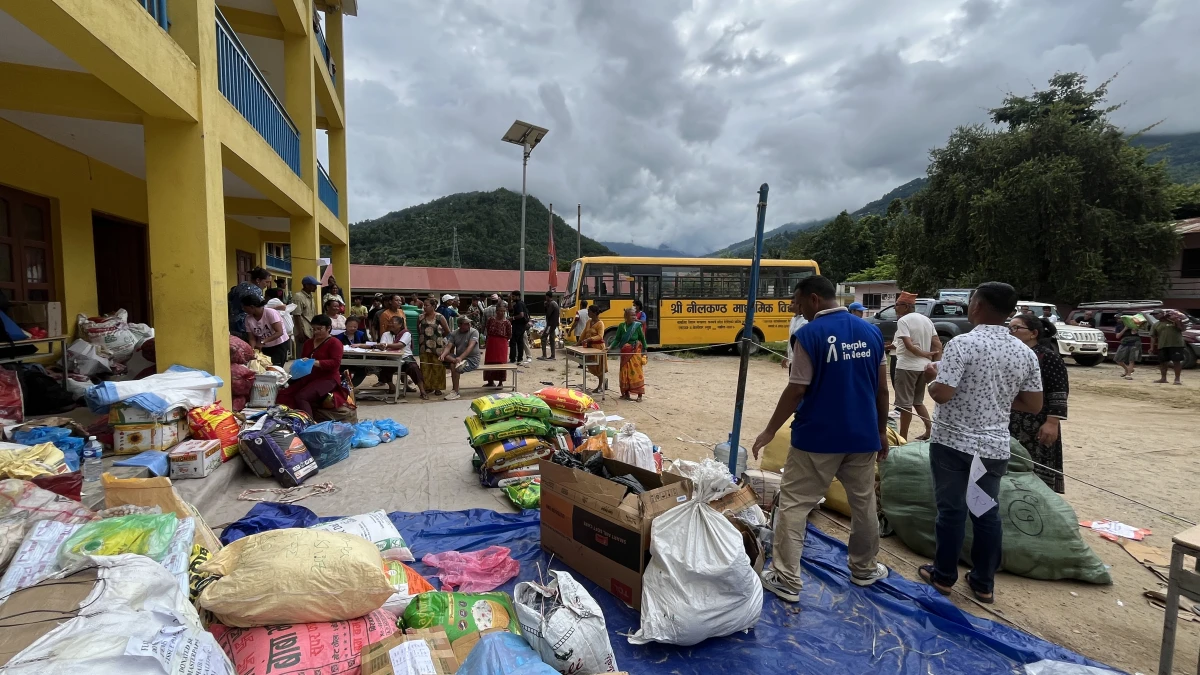
Difficult access, aid reaching hundreds of people
“Access to the area is still very complicated. Of the 133 kilometres between Kathmandu and Kalikasthan, 90 kilometres run along unpaved roads through difficult terrain. A journey that took around four hours before the disaster now takes twice as long. And some areas can only be reached by air,” says Marek Štys, head of our humanitarian programmes.
“Despite these difficult conditions, we have managed to get material humanitarian aid – food, hygiene supplies, and so-called dignity kits, including underwear – to more than a thousand people. We are also coordinating warehouse management, stock records, and subsequent distribution with local authorities and offices,” adds Marek Štys.
We are also helping local authorities run emergency accommodation centres. “We are keeping the whole centre running, including the kitchen. 51 adults and 12 children are currently staying here,” says Ransubba Gurung from our team, describing how one of the evacuation centres in Rasuwa district operates. “We make sure local people get nutritious, balanced meals. They have four meals a day here, from dal bhat to eggs, cottage cheese, or fresh vegetables,” she adds.

We are also putting various safety measures in place here to protect the privacy and dignity of people who lost their homes as a result of the disaster.
Coping with trauma and psychosocial support
We have two specialised mental health and psychosocial support (MHPSS) workers on the ground.
They identified a need for psychological first aid and psychoeducation, not only among residents affected by the disaster but also among frontline workers – rescuers and medical staff, as well as authority and hospital personnel.
This support is now being provided through field visits to people's homes. At the same time, preparations are under way for children's safe return to the classroom, which requires systematic psychosocial care focused on helping them process their experiences of trauma.
How can we prevent further disasters? Early warning systems can help
Our staff are also working with Nepalese authorities, including the Department of Hydrology and Meteorology, providing technical support and sharing our experience with early warning systems (EWS). Together, in response to the August floods, we are assessing how the warning systems performed and we are identifying weaknesses and lessons for future improvements.
The aim is to better understand local conditions, monitor how threats develop, identify populations at risk, and determine how much time is available for preventive measures.
The result will be a practical plan covering suitable technologies, the investment required, and clearly defined institutional roles, so that people in the most at-risk areas are protected.
We have years of experience with early warning systems
People in Need has many years of experience with early warning systems (EWS), not only in Nepal but also in Cambodia, Laos, the Philippines, Armenia, and Bosnia and Herzegovina.
In 2025 alone, we protected 1.7 million people in this way.
Thanks to rapid warnings, people are able to protect their lives, property, and livelihoods. Warnings reach them through a range of channels: automated voice calls, SMS, sirens, sign-language video recordings, or community groups on WhatsApp.

People across the Czech Republic have donated more than CZK 41 million to the SOS Nepal appeal
The solidarity shown by the Czech public has been truly extraordinary. Immediately after the disaster, we released CZK 1 million from our Club of Friends, which allowed us to fund immediate aid before further resources became available.
At the same time, we launched the SOS Nepal appeal, to which people have so far contributed a total of CZK 41.2 million. The appeal remains open.
Next up: insulating shelters and winter supplies
Over the coming months, we will continue providing psychosocial support and plan to launch leisure and educational activities for children.
As winter approaches, we will provide insulated shelters and winter supplies for 1,000 households, and set up temporary latrines, drainage, and water points for a further 100 households.
We will also provide financial assistance to the most vulnerable families and residents, including through “cash for work” programmes, to support their independence and their own livelihood opportunities, and to help contribute to the country's recovery.


