
IN 2025, WE HELPED MORE THAN HALF A MILLION UKRAINIANS
2025 was another year of severe trials for Ukraine. Intense fighting and relentless attacks on energy infrastructure continued to degrade the quality of life for millions of people. Thousands of families found themselves without electricity, heat, and water.
Despite the difficult conditions, we continued our work: we provided emergency humanitarian aid, delivered briquettes to people, and contributed to the purchase of fuel. We helped internally displaced families and people near the front—wherever Ukrainians needed it most.
Throughout the year, our team supported evacuees, helping them with registration and providing financial assistance so that they could move to safer locations. At the same time, we provided urgent assistance to people living in villages near the front.


"In 2022, we fled Mariupol and found refuge in Dnipro. Our house was hit by a rocket, but miraculously, we survived. The house remained standing, even though the explosion blew out the windows on the balcony. I care for my two daughters, and at one point, I simply could no longer afford to pay the rent. It was incredibly difficult to ask someone for help, but I had no other choice. Thanks to financial assistance, we didn't have to move and could stay in our own home." Maryna Lyeshchenko, an internally displaced person from the Donetsk Oblast
Humanitarian aid deliveries are becoming increasingly difficult due to the frequency of FPV drones. Nevertheless, we remain one of the largest providers of humanitarian aid in the country. We continued to supply people with fuel briquettes or provide financial contributions so they could buy heating fuel to survive the harsh winter.


We continued to restore and strengthen critical infrastructure such as water supply systems, heating plants, and heat pipelines. We supplied these enterprises with new equipment, boilers and renewable energy devices, thanks to which the villages have continuous access to electricity, heat and water.

In 2025, we launched a pilot project that combines solar and wind energy production to help ensure a stable supply of electricity throughout the year. We continued to help restore the hot water pipeline network and launched additional waste recycling and collection projects.

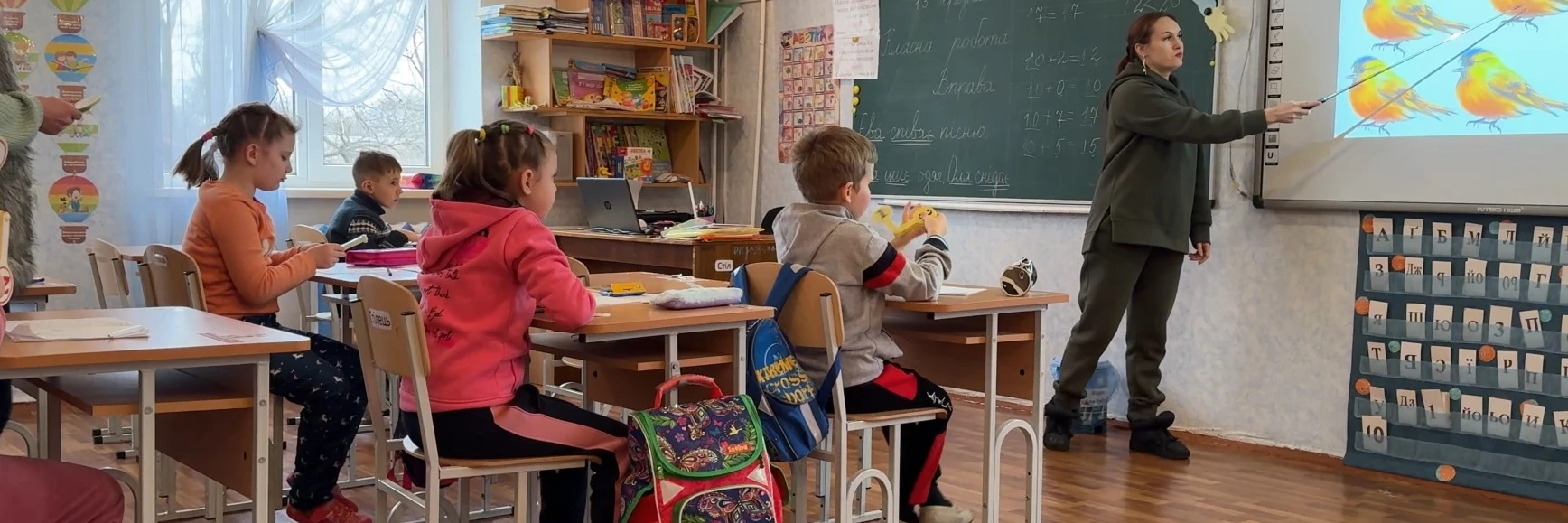
Ukrainian children have long suffered from repeated interruptions to their education, so we set up temporary classrooms and offered them tutoring courses to help them catch up on missed classes. We also launched initiatives, such as preparation for the National Multidisciplinary Test, to help students pass their exams. In addition, we developed and launched courses on inclusive education and media literacy for teachers.


In addition to responding to emergencies, we also invested in Ukraine's recovery. We offered grants for community initiatives that help municipalities prepare for the coming winter.
We provided targeted support—grants, training and mentoring—to veterans and their families so that they could start or expand their businesses.

In Dnipro, we launched a new programme that combines mental health support with advice on starting or expanding a business for traumatised Ukrainians.

We also supported small and medium-sized enterprises and employers who are working to improve conditions for vulnerable groups, thereby contributing to economic recovery and social cohesion in their communities.

Our teams across Ukraine are involved in these projects. They work every day, solving real problems.
Each number in our data represents a household, school or community that we have helped to endure, despite the circumstances—we will continue to support war-affected communities and their residents.


