
From Skills to Service: Young People Keeping Water Flowing in Ethiopia
Published: Jan 12, 2026 Reading time: 2 minutes Share: Share an articleWhen a water pump breaks in a rural Ethiopia, communities face weeks-long waits for help. Today, that is changing thanks to young technicians trained to fix the problem themselves.
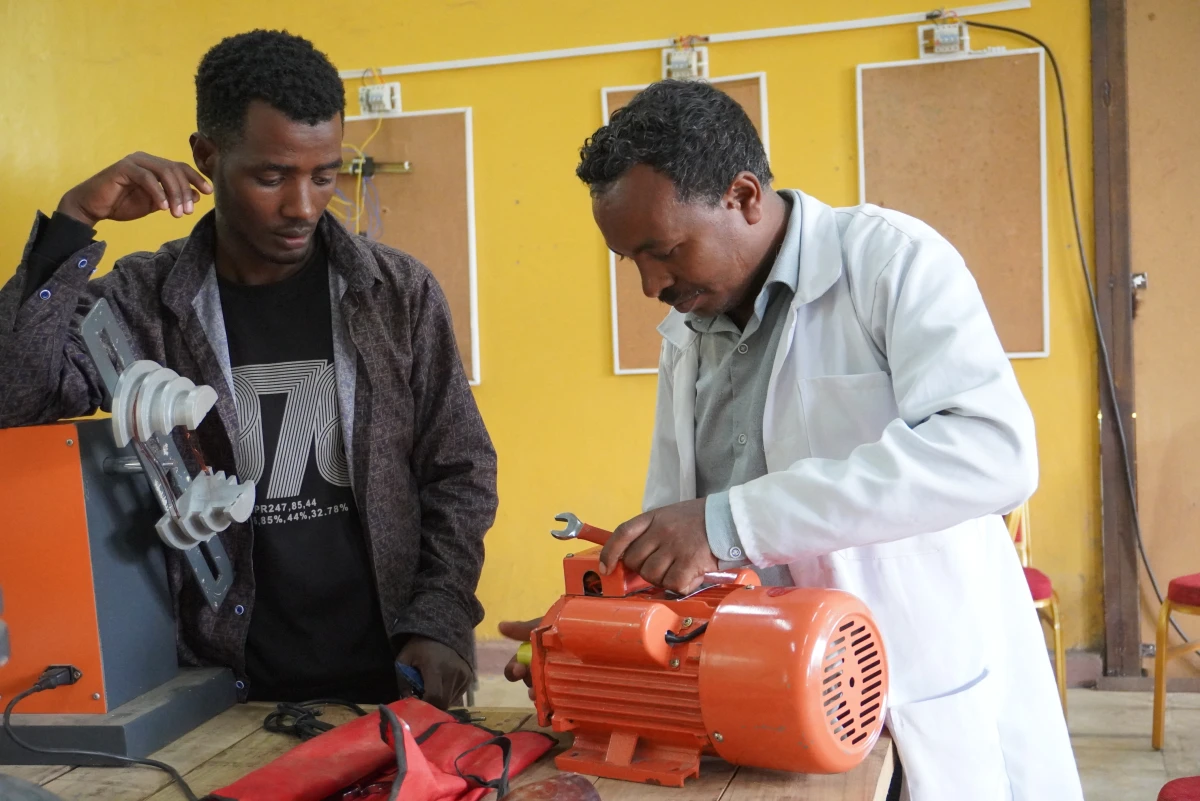
At Durame Polytechnic College, students spend their days rewinding motors, installing solar panels, and repairing pumps. With funding from the Czech Development Agency, we are helping equip these young Ethiopians with practical skills that respond directly to local water and energy challenges. Moreover, these skills open pathways to employment.
Across Central and Southern Ethiopia, and Oromia region, technical colleges work closely with woreda water offices and regional institutions. Their focus is simple: build strong technical skills and ensure water systems continue to function long after construction ends.
Training is hands-on and practical. Students complete intensive courses on equipment used in their communities.

Strengthening trainers is a key part of our approach. We have helped instructors enhance their abilities—they then pass their knowledge on to students. This cascading model ensures skills remain within institutions and benefit future trainees.
For students like Selam Seyoum, enrolled in a short-term water supply course, the learning goes beyond the classroom.

This work has impacts far beyond the colleges. Technicians, water operators, and water user associations receive practical support to improve the management and maintenance of rural water systems. Faster repairs, better maintenance, and stronger local ownership help reduce breakdowns and keep water flowing.
Through improved water system functionality and sustainability, an estimated 1.2 million people indirectly benefit from more reliable, safe drinking water while young Ethiopians gain the skills to earn a living and serve their communities.


