
From systems to stories: Civil society in action across Zambia
Published: Mar 26, 2026 Reading time: 4 minutes Share: Share an articleAcross Zambia, civil society organisations (CSOs) are critical in supporting communities, advocating for accountability, and helping communities navigate challenges that affect their daily lives. Yet they are doing so under growing pressure.
While expectations from communities and stakeholder remaining high, rising community needs, climate shocks, and short-term funding cycles continue to shape how organisations operate.
Through the European Union‑funded Local Empowerment and Development—Civil Society (EU CSO LEADS) project, we (People in Need Zambia) and the Jesuit Centre for Theological Reflection (JCTR) are working with local organisations to build the systems, skills, and structures required for long-term impact.
As Nora Zyamike Nyirenda, Project Manager at People in Need explains:

Building systems that last
Civil society in Zambia operates within a challenging national context. According to the 2022 Living Conditions Monitoring Survey, more than 60% of the population lives below the poverty line. Many households face challenges linked to droughts, floods, limited digital access, and energy constraints.
For CSOs, these pressures are compounded by short funding cycles and the demand for measurable results.
The EU CSO LEAD’s project began with the Organisational Capacity Assessment Tool (OCAT) and the Needs and Organisational Capacity Assessment Tool (NOCAT), which helped to identify strengths, gaps, and areas for growth. These findings informed both the financial and non-financial support.
Since 2024, the project has supported over 30 CSOs through assessments, with 20 receiving Financial Support to Third Party (FSTP) grants and 19 engaged in mentorship and peer learning.
Mr. Yussef Ayami, Team leader from the Family Development Initiative (FDI) shared:

For many organisations, strengthened internal systems are enabling them to respond more effectively to their communities.
From frameworks to practice: The role of the technical assistance visit
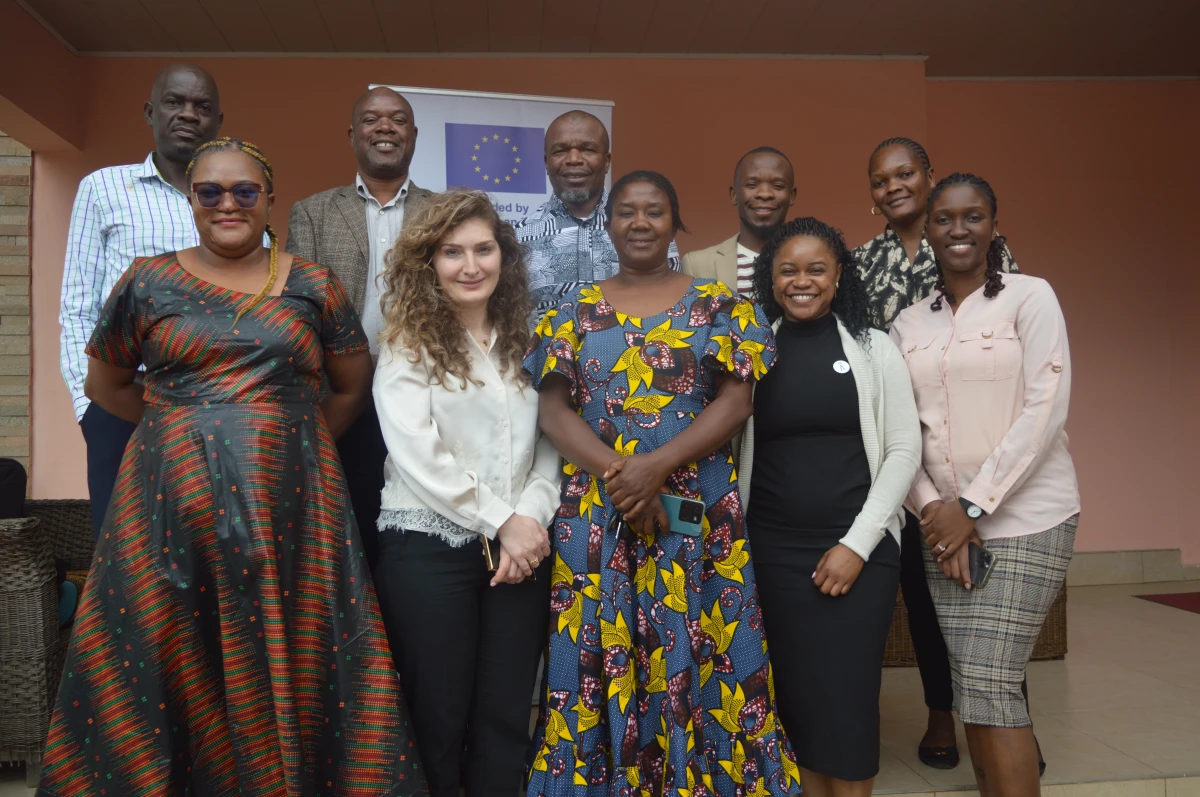
To build on this progress, a joint team from PIN and JCTR, together with the project’s Technical Advisor, Nana Peradze visited Lusaka, Kabwe, and Mansa.
The visit marked a key moment in the project cycle—translating assessment findings and, and early lessons from the initial FSTP phase, into targeted, hands-on technical support.

Organisations also highlighted ongoing challenges, including limited resources, coordination gaps, and sustaining work beyond funding cycles.
Alongside this, organisations were onboarded onto our Civil Society Now (CSN) platform, which will support their continued learning and collaboration.
Where systems meet reality: Voices from Luapula Province
The impact of a stronger civil society organisations is most visible at community level.
In Luapula Province, Participatory Education and Action for Community Empowerment (PEACE) is supporting communities in Romano and Masaba to better understand and defend their land rights.
For years, members of these communities faced land disputes, with no clear pathways for justice. Today, that is changing. Through training provided by PEACE, community members like Given Mwansa can now navigate disputes, and engage with traditional leaders and authorities.
This growing awareness is not happening in isolation, community members like Josephine Tembo have successfully reclaimed land, and she is now sharing that knowledge with her neighbours ensuring that others are informed and able to act.

In nearby Masaba, illegal magnesium mining has left deep, dangerous pits, destroyed farmland, and displaced families. Headwoman Astridah Chansa recalls years of intimidation:
Communities are now advocating for safer land management and protection of their livelihoods.
Local volunteers find their voice in Makumbi
In Makumbi, the Center for Future Generation (CFG) is strengthening and building local community leadership by training Community‑Based Volunteers (CBVs). These volunteers, selected with support from traditional leaders, support communities, engage local leaders, help locals understand governance processes, and advocate for services such as water, education, and inclusion through the government’s Constituency Development Fund (CDF).
Despite long distances and limited transport, volunteers visit households and spread critical information.

The EU CSO LEADS project is demonstrating how targeted organisational support can translate into tangible, community-level change.
Why this work matters: Civil society as a foundation
CSOs are essential to sustainable development. This is especially true when connecting communities to decision makers, amplifying citizen voices, and promoting accountability.
Through EU CSO LEADS, PIN and JCTR are working alongside local organisations to build that strength one organisation, one community, at a time.
Strengthening civil society is not only about programmes. It is about building the systems foundations that enable communities to protect their rights, shape their futures, and respond to challenges they face.


