
Lightning: Nepal’s overlooked disaster risk
Published: Feb 17, 2026 Reading time: 4 minutes Share: Share an articleLightning is often perceived as a sudden and unavoidable act of nature; however, it is a universal global hazard that claims approximately 24,000 lives each year, injuring nearly 240,000 people worldwide.*
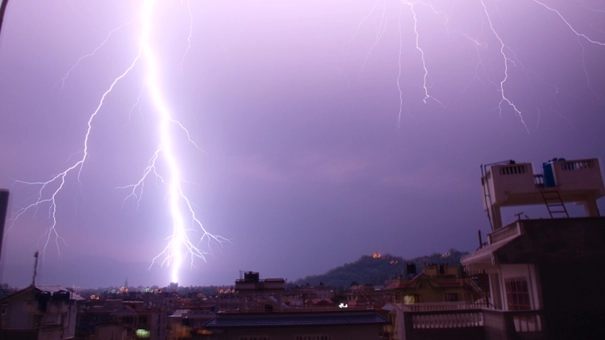
In Nepal, lightning is among the country’s deadliest yet least recognised natural hazards, claiming more lives annually than floods or landslides. Despite the high predictability at short timescales, lightning risk has historically remained outside formal disaster risk reduction (DRR) planning and early warning investments.
Nepal experiences more than one million lightning strikes each year, resulting in over 100 fatalities annually—making it the country’s second deadliest natural hazard after earthquakes.
These fatalities are not random but are predominantly concentrated among populations engaged in outdoor labour, with subsistence agricultural workers facing the highest risk. Risk is further intensified by structural vulnerabilities, including poor housing quality, the absence of safe shelters, gaps in national policy, inadequate healthcare facilities, low risk awareness, and weak emergency communication systems. Together, these factors turn a predictable hazard into a deadly one.
Importantly, the lightning risks are not evenly distributed. Research shows that:
- Lightning activity peaks during the pre-monsoon and monsoon seasons (April–June).
- Hilly and mid-mountain regions record the highest fatality rates, even though lightning density is higher in the plains.
This highlights that lightning risk is not just about hazard intensity, but about exposure, vulnerability, and access to timely warnings.

Why lightning early warnings matter
Lightning is one of the few hazards where minutes can save lives. Even a short warning of 10 to 15 minutes can allow people to stop fieldwork, seek shelter, or avoid high-risk activities. Yet in many rural areas of Nepal, such warnings have simply not existed.
The Lightning Early Warning System piloted in Raksirang Rural Municipality of Makawanpur district in Central Nepal demonstrates how this gap can be closed at the local level. The Lightning Early Warning System is designed for rural and marginalised communities. The system:

- Detects early changes in the atmospheric electric field during cloud formation and maturation, providing actionable lead time well before lightning initiation to support people-centred early warning and anticipatory action;
- Processes data in real time using internationally recognized standards (IEC 62793);
- Disseminates warnings through sirens and coloured lights (yellow, orange, red) across villages;
- Provides approximately 15 minutes of lead time before lightning occurs; and
- Covers around 800 km², benefiting communities with historically high fatality rates and the lightning occurrence maps.
Importantly, the system does not rely on smartphones or literacy. Instead, it uses audio-visual alerts, a siren combined with colour-coded flashing lights where yellow means ‘Be Aware,’ orange means ‘Be Prepared to Act,’ and red means ‘Act Now’. This methodology makes the system accessible to children, older people, persons with disabilities, and linguistically diverse communities.
Lightning early warning in action
The Makawanpur lightning early warning system demonstrates that saving lives from lightning in Nepal is not a technical challenge; it is a question of political will, investment, and scale. With affordable sensors, urgently deploying the Common Alerting Protocols, and community-based alerting, Nepal already has the building blocks for a nationwide early warning network.
Scaling this model through provincial and municipal governments, integrating it into the National Disaster Risk Reduction and Management Authority's multi-hazard early warning architecture, and linking it to alerting and response systems would allow Nepal to move from isolated pilots to universal protection. This is exactly what the UN Secretary General’s ‘Early Warnings for All’ initiative calls for: people-centred, last-mile, and inclusive early warning that reaches farmers in the fields, children in schools, and persons with disabilities in their homes.
Lightning may strike in milliseconds, but with effective early warning systems, those moments can mean the difference between life and death. Nepal now has the opportunity to ensure that no one is left exposed simply because they were never warned.
*Jensen JD, Thurman J, Vincent AL. Lightning Injuries. 2023 Jul 17. In: StatPearls [Internet]. Treasure Island (FL): StatPearls Publishing; 2025 Jan–. PMID: 28722949.


