
The growing business of solar power in northern Syria, and what it needs to function better
Published: Sep 17, 2026 Reading time: 6 minutes Share: Share an articleAcross Aleppo, Idlib and Raqqa, residents are already buying solar systems to cope with unreliable electricity supply. Our colleagues, from People in Need Syria, spoke with retailers, wholesalers, technicians, training providers, battery recyclers, customers and a representative of the Ministry of Energy, to understand how the market works, and what prevents it from working better.
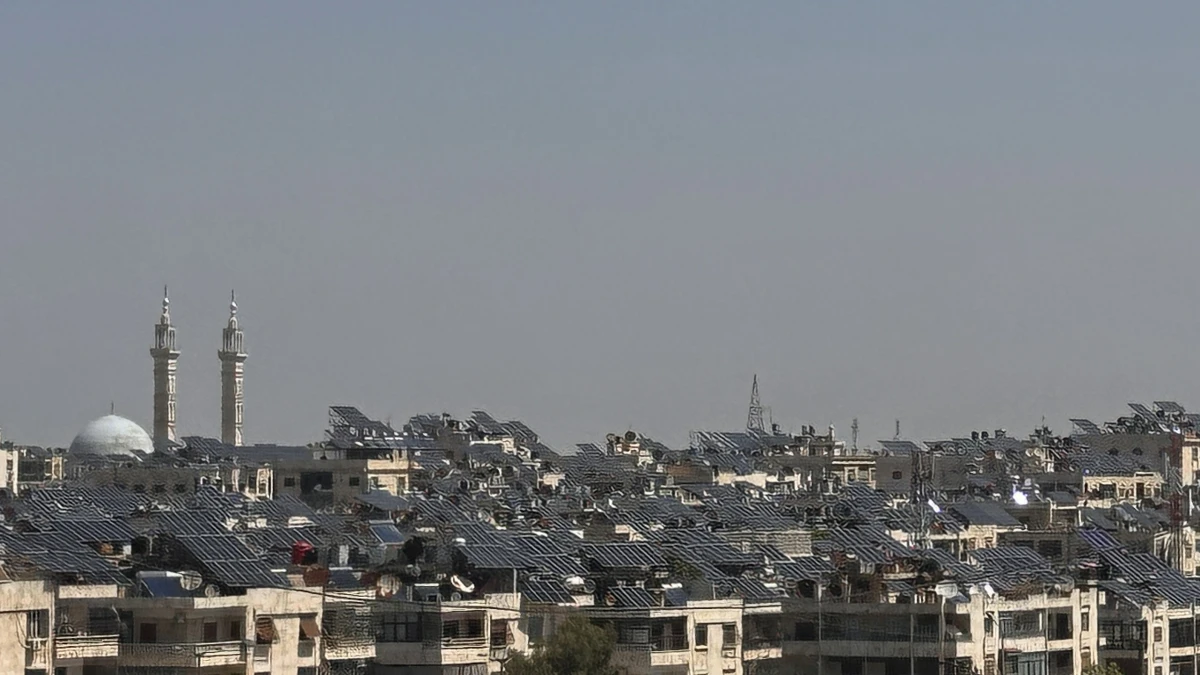
Solar energy in Syria is usually discussed in terms of panels and megawatts. But our team at PIN Syria wanted to understand it as a market: who sells what to whom, who trains the technicians, who sets the informal rules that decide whether a customer trusts a retailer, and where the whole system currently breaks down. Between April and May 2026, we spoke with wholesalers and importers, solar retailers and SMEs, existing and prospective customers, vocational training centres, battery recyclers and a representative of the Ministry of Energy. The findings paint a picture of how this market, that is already quite active and commercial, behaves, and the ways in which it is leaving people behind in specific, but fixable ways. This was a qualitative market assessment rather than a comprehensive business census, so figures on the size of the market should be understood as informed estimates based on interviews and direct field observation.
You can read the full assessment here.
A market that exists, but needs to work better
Solar energy in northern Syria is already a functioning private sector. We estimate that there are roughly 500 solar shops and small businesses operating in Aleppo, 250 in Idlib, and 100 in Raqqa. Households buy small systems for lighting and refrigeration, farmers use solar pumps for irrigation, and businesses and factories are turning to panels to keep operating through outages. A small household system typically costs between $300–700; an industrial system can run to $50,000. These figures are informed estimates that together describe a sector with real scale and real customers already trading.
This tells us the kind of support that those active in this market need to assume the specific functions currently absent from the market.
Cost and confidence are limiting adoption
Every conversation confirmed a demand for solar power—unreliable public electricity, high fuel and generator costs, and a power supply independent of the grid. However, cost and confidence limits uptake of solar products. Customers describe struggling to compare offers, verify the quality of a panel or battery, or understand what is covered by a warranty. Installation quality varies widely between providers. Some installers do good work, others do not, so customers cannot count on consistent quality. In addition, there is no formal financing to help people buy systems upfront. The market works well, but is uneven on quality and affordability, and is one where a handful of specific, identifiable problems can be fixed.
Skills are the fastest, most testable entry point
Of everything we found, the skills gap was the clearest opening for immediate action. Solar SMEs recruit almost entirely through personal networks and train workers on the job. The vocational training centres we spoke with in Aleppo and Raqqa are not currently offering strong solar-specific training. Many are held back by outdated curricula, limited equipment, and no real link to employers or graduate outcomes. Ministry of Energy representatives agreed that there's a shortage of qualified technicians, and a real need for practical, employer-relevant renewable energy training.
The assessment also identified barriers related to affordability, product quality, customer information, after-sales service and battery handling. Skills were selected as the first entry point not because these other constraints are less important, but because cooperation between training providers and employers offers a practical and testable way to improve how the market works without waiting for wider financial or regulatory reform.
This is why our recommended next step is a focused proof of concept in Aleppo, built around three actors working together rather than us working alone. Vocational training centres would provide structured training, solar SMEs would help design that training and offer workplace exposure, and suppliers would run product-specific sessions on installation, safety and common faults. It is a narrow, testable model precisely because it does not require regulatory reform, new financing infrastructure or a mature solar finance market to get started. The pilot will test, rather than assume, whether these actors have sufficient incentive to continue the model and share its costs after our temporary support ends. Progress will be assessed through concrete changes in behaviour, including curriculum co-design, internships, equipment or cost-sharing, graduate recruitment and retention, and whether training centres continue monitoring labour-market demand.
Quality and trust are important
Beneath the affordability sits a second challenge, which is that nobody can currently guarantee that a solar power system lives up to expectations. Local certification is largely absent. Warranty terms vary supplier by supplier. Customers rely on word of mouth, referrals and social media rather than independent advice. Battery recycling, meanwhile, is already underway at three formal recyclers in Aleppo and Raqqa, but without the safety standards or training that would make it reliably safe for workers and the environment. Training alone will not resolve these problems. The wider pathway for market improvement therefore also includes better consumer information, reliable after-sales services, suitable financing, product certification and safer battery recycling as areas for further testing and investment.
What we are testing next after the Aleppo assessment
These findings are shaping our approaches this sector going forward. Our role is to help the actors already in this market, vocational training centres, SMEs, suppliers and technicians, to work together in ways they are not currently structured to do on their own. Our role is to facilitate how the market functions so that it could eventually carry itself, and document what does and does not work and why.
The immediate next step is the Aleppo proof of concept described above. If it succeeds, the evidence it generates should open the door to the pathways this assessment flagged but could not yet test in full. These are customer finance, product certification, independent advisory services, and safer battery recycling.
Syria's energy sector is opening to new investment and attention faster than at any point in recent years. We are publishing this assessment because we think the evidence it contains, about who is already operating in this market, what is holding it back, and where a small, well-placed intervention could make the biggest difference, is useful to anyone, a donor, an investor, a technical partner, deciding where to put their support next
“Solar power is already part of daily life and business in Syria. The question is no longer whether a market exists, but how local actors can strengthen skills, quality and trust so that it works better for more people.” Omar Sammak, PIN Syria
This article is a tour-de-horizon of Constraints Analysis within the Solar Energy Market System of Northern Syria, our in-depth look at the solar power market situation in Aleppo, Idlib, and Raqqa governates. The assessment was conducted during April and May 2026 as part of our Market Systems Development (MSD) Feasibility Project.


