
What do Syrians actually want? What listening to Syrians revealed about belonging, trust, and change
Published: Jun 5, 2026 Reading time: 6 minutes Share: Share an articleTogether with our partners Sanad Youth and the Syrian Centre for Civic Action (SYCAC), we spoke with 374 people across Syria about what holds communities together and what is pulling them apart. The answers challenge some common assumptions about what social cohesion actually looks like on the ground currently in Syria.
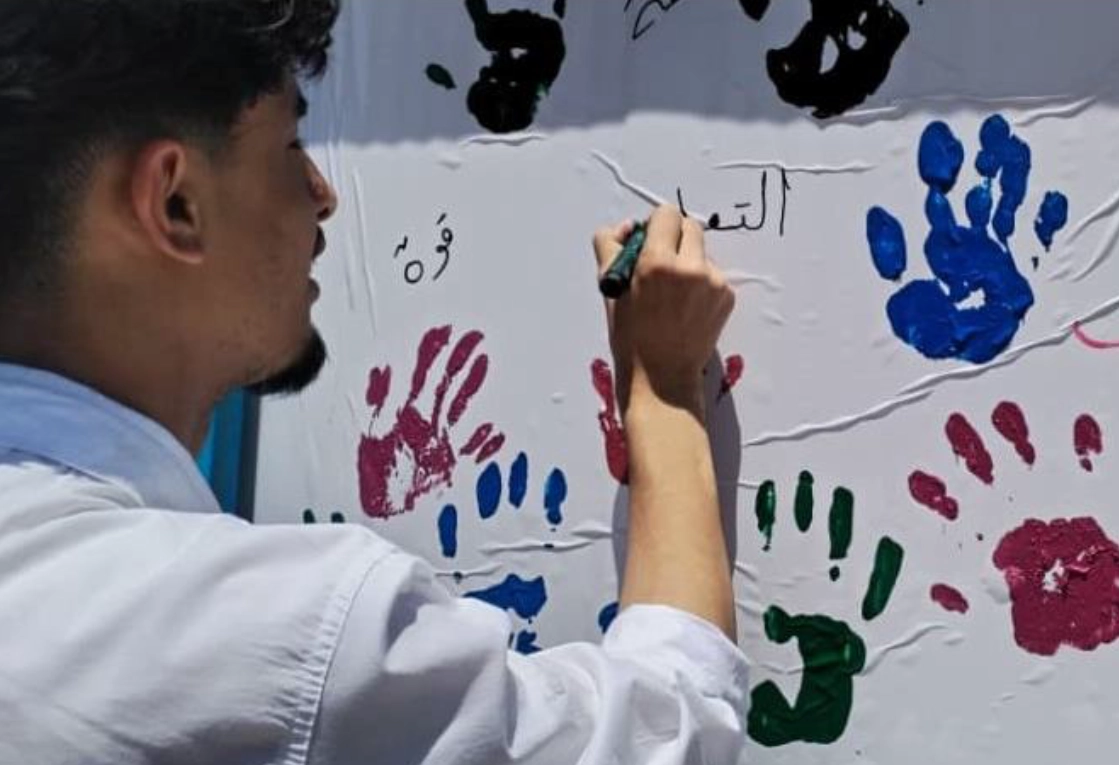
When you ask people in Syria what they want, they do not start with abstract concepts. They talk about a job. A functioning school. A road that does not flood in winter, and a local official who actually returns calls. These were the answers we kept hearing when we sat with communities across the country between January and April 2026 — 374 people, half of them women, across 10 governorates, in 34 focus group discussions conducted with our partners Sanad and SYCAC.
Social cohesion refers to the relationships, trust, sense of belonging, and forms of engagement that enable people from different backgrounds to live together, address shared challenges, and engage constructively with institutions. So, to better understand these dynamics currently in Syria, we came with three fundamental questions. What holds communities together, what is pushing them apart, and what do people actually want? The answers have direct implications for how development programming and policymaking in Syria should be designed.

Belonging has become localised
Syria has a powerful sense of national identity. But across our discussions, it came up as a symbol more than a lived reality. 'Belonging has shifted first to the tribe, then to the local area, and finally to Syria,' one participant explained. This is not a rejection of nationhood. It is an adaptation to years of insecurity, displacement, and the slow erosion of institutions that once connected people to something larger than their immediate street.
In Idlib, Raqqa, and Deir ez-Zor—areas that have experienced intense conflict and repeated displacement—many participants described feeling like strangers in their own communities. In more stable areas, local solidarity had strengthened as a survival strategy. Neighbours rely on each other when formal systems do not function, an example of real social cohesion.
Who gets heard?
Across every location, the answer to this question was consistent—it is those who are already powerful. Decision-making spaces, such as local councils, community committees, dialogue forums, are dominated by tribal leaders, individuals with political connections, and people with economic influence. Women, young people, displaced communities, and people living in poverty are visible in communities but largely absent from the rooms where decisions are made.
Though this is a problem shaped by norms, it is predominantly a structural one, as representation follows power. We found that changing it requires deliberate efforts, which includes transparent selection processes, funded outreach, and a genuine shift from symbolic inclusion to meaningful voice. Several participants were direct about the distinction, that simply attending a meeting is not the same as being heard.

The economy is the cohesion issue
This has direct implications for how social cohesion programmes are designed. An intervention focused purely on dialogue and reconciliation, without addressing the material conditions that generate mistrust, will struggle to hold. Communities made this clear, that to them services must come first, and trust will follow. “Improving services will increase trust between the community and the government,” one participant said. Another said, “Projects that create real jobs are more important than short-term aid."
Trust remains fragile
Trust emerged as one of the most contested dimensions of social cohesion across locations. Participants frequently described low confidence in institutions and limited expectations that concerns raised through formal channels would lead to meaningful change. At the same time, trust was not absent; it was often placed in local actors, community leaders, informal networks, and organisations that demonstrated responsiveness to community needs. Across discussions, participants consistently linked trust to visible action, highlighting that reliable services, accountability, and meaningful engagement are essential for strengthening relationships between communities and institutions.
Civil society is working, but under significant constraint
Local civil society actors and informal community structures are doing much more than international frameworks often credit. In many areas, they are the primary source of mediation, community problem-solving, and access to services. One participant estimated that tribes resolve the vast majority of disputes before they reach formal systems, highlighting the significant role informal mechanisms continue to play in many communities.
But these actors face real limits. They lack funding, coordination, and critically institutional protection. They can address community-level issues, but they cannot easily influence the systemic decisions that most affect most people's lives. From a development programming perspective, closing that gap is not just a capacity question. It is a question of institutional design and sustained investment.

What we are taking forward
These findings are directly shaping how we approach our programming in Syria. They tell us that social cohesion cannot be treated as a standalone objective. It is produced or undermined, by whether people have jobs, whether services function, whether they feel represented, and whether engaging with institutions carries real risks. The findings suggest that efforts to strengthen social cohesion should build on dialogue and community initiatives while simultaneously connected to tangible inclusive engagement, responsive local governance, service delivery, and economic opportunities. Communities consistently described these dimensions as interconnected rather than separate challenges.
Programmes that work in this context are those that start where these communities are, and which are practical, locally grounded, implemented through trusted actors, and linked to visible outcomes. Dialogue that is disconnected from their material reality does not build trust, and just confirms the suspicion that engagement is performative.
By publishing this analysis, we hope the evidence will inform the work of local actors, civil society organisations, donors, and policymakers seeking to support inclusive recovery and social cohesion in Syria. The communities that took part in these discussions did so in the hope that their perspectives would reach people with the ability to act on them.
This analysis is based on 34 focus group discussions PIN conducted between January and April 2026 across 10 governorates in Syria, in partnership with Sanad and the Syrian Centre for Civic Action (SYCAC). A total of 374 participants took part, 50 per cent of them women. The full report is available to download here.


