
Brick by brick: Geoffrey’s eco-briquette business journey
Published: Feb 19, 2026 Reading time: 5 minutes Share: Share an articleIn Sefula, a community in Zambia's Western Province, Geoffrey Kangwanda carefully measures agricultural waste, compressing the materials into dense bricks of eco-briquettes. Despite a visual impairment, Geoffrey has mastered production and is building a sustainable livelihood for his family.
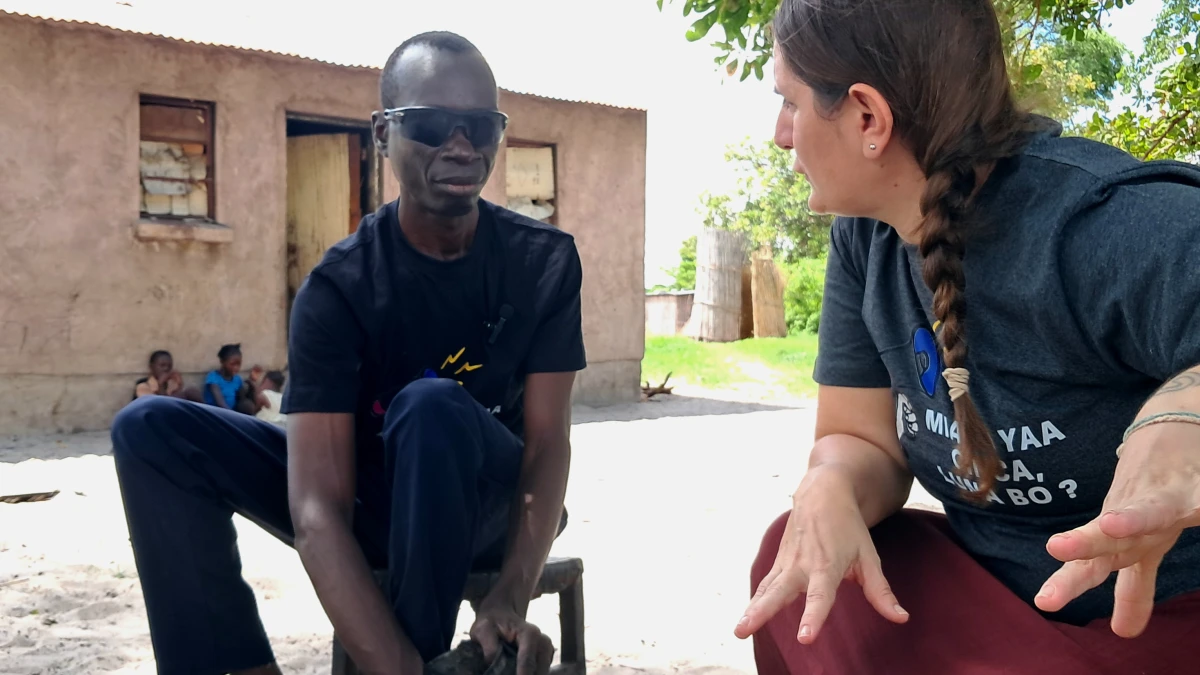
Geoffrey's story demonstrates that disability is not inability—a principle central to our approach to community development.
Turning skills into enterprise
Geoffrey was among 625 people we trained in eco-briquette and improved cookstove production in Mongu and Limulunga districts.
Our three-day training covered climate change and environmental management, eco-friendly approaches to forest conservation, and hands-on production techniques for eco-briquettes and improved clay cookstoves. Training combined theoretical instruction with practical application across eight communities: Lukulo (Forest and Rangeland), Nakanya (Sanongo), Mbuta, Ushaa, Nakalembe, Simaa, and Sefula.
What sets Geoffrey apart is his initiative. While many trained participants work in groups due to limited equipment, Geoffrey began producing eco-briquettes independently at home. He's currently building up stock and searching for market opportunities. Once customers discover the product—just ten cubes provide more than two hours of efficient, clean cooking fuel—he's confident sales will follow.
"My plan is to continue making briquettes while looking for a market for people to buy," Geoffrey explains. "I'm confident I can successfully make eco-briquettes, and after this, I'd also like to start moulding improved cookstoves."
His ambitions extend beyond the immediate income. He and his wife, who also lives with a disability, are working together toward a specific goal: saving enough money to buy land where they can build a more stable future for their two young daughters.
"I will save money until it is enough to buy a piece of land," he says.
A Life Shaped by Resilience
Geoffrey lost his sight at just one year old. Growing up blind in rural Zambia meant facing barriers at every turn. His parents, struggling with poverty themselves, couldn't afford specialised education. When they passed away early, Geoffrey had to chart his own path.
"I had to drop out because I wasn't learning well and didn't have assistance," he recalls. "But through interactions with different people, I've learned quite a bit. I easily pick things up by listening to others."
That ability to learn by listening is exactly what enabled Geoffrey to master eco-briquette production during the training, and to envision a future where he can provide for his family through his own skills.
While the family currently receives 1,200 kwacha (€ 55) every two months through Zambia's Social Cash Transfer programme for vulnerable households, Geoffrey is determined to create additional income through his own enterprise.

Connecting to Support
During work in the community, our team learned that Geoffrey was already registered with the Zambia Association of Persons with Disabilities (ZAPD), though he hadn't yet received support from them. His wife, however, wasn't registered. The team assisted her with the registration process so both could obtain resources and advocacy support when needed.
These connections matter. When people with disabilities can access networks and resources designed to support them, they gain not just services but also community and voice. The project prioritises inclusion at every stage, from how trainings are designed and delivered to how participants are supported after the training ends.
Beyond Geoffrey: Project Impact Across the Region
Geoffrey's journey is one story among many emerging from Western province. In its third year, our Enhancing Livelihood Opportunities through Ecosystem Protection project has reached thousands of people with clean energy solutions, sustainable agriculture practices, and ecosystem conservation efforts.
Clean and Renewable Energy:
- 808 community members learned about alternative fuel-saving solutions through behaviour change campaigns.
- All 625 people trained in improved cookstove and eco-briquette production received their own cookstoves.
- Another 478 community members attended biogas technology events, and 29 government extension officers from the Ministry of Agriculture and Ministry of Fisheries and Livestock were trained to become trainers themselves.
- Eight new savings and credit cooperatives were established in partnership with the Ministry of Small and Medium Enterprise Development, creating pathways for entrepreneurs like Geoffrey to access capital.
Rangeland and Biodiversity Conservation
Perhaps the most striking result has been the return of the Wattled Cranes. In July-August 2024, observers counted 48 cranes on the floodplain—an 850% increase from the baseline of just five cranes, achieved through partnership with BirdWatch Zambia. The project has also cleared five hectares of invasive Mimosa pigra, with work continuing. Ten Community Rangeland Management Committee members and four government staff received training in sustainable livestock production and rangeland management. Two of the three Community Forest Management Groups have been formally recognised by government, giving communities an official voice in managing their natural resources.
Looking Ahead
Geoffrey demonstrates what is possible when programmes meet people where they are and equip them with the skills they can use immediately. His confidence in his ability to produce quality eco-briquettes isn't just about the product, it's about what that product represents: independence, dignity, and a chance to build the future he envisions for his daughters.
As the project enters its third and final phase, the focus remains on ensuring that opportunities reach everyone, regardless of ability. Through eco-briquettes, improved cookstoves, biogas technology, and sustainable land management, communities across the Barotse Floodplains are finding ways to protect their environment while strengthening their economic resilience.
Geoffrey's story is still being written. The briquettes are stacked and ready. Now comes the next chapter: finding customers, making sales, and saving for that piece of land.
About the Project
The Enhancing Livelihood Opportunities through Ecosystem Protection project operates in Zambia's Barotse Floodplains, a region that serves as both a biodiversity treasure and an economic lifeline for communities in Western Zambia. Funded by Jersey Overseas Aid and Czech Aid, the project is implemented by People in Need in partnership with the World Wide Fund for Nature. The project supports climate-vulnerable communities through sustainable resource management, clean energy, and biodiversity conservation.


