
Six countries, one earth: Protecting soil around the world
Published: Dec 2, 2025 Reading time: 6 minutes Share: Share an articleSoil is life. This living organism right under our feet provides food and livelihoods to billions worldwide. Yet, globally, this resource is degraded by pollution, erosion, deforestation, overgrazing, and exploitative farming. Healthy soils in healthy lands are essential for food security and ecosystem stability. At People in Need, we focus on soil protection worldwide and we support local communities in their efforts to protect their land.
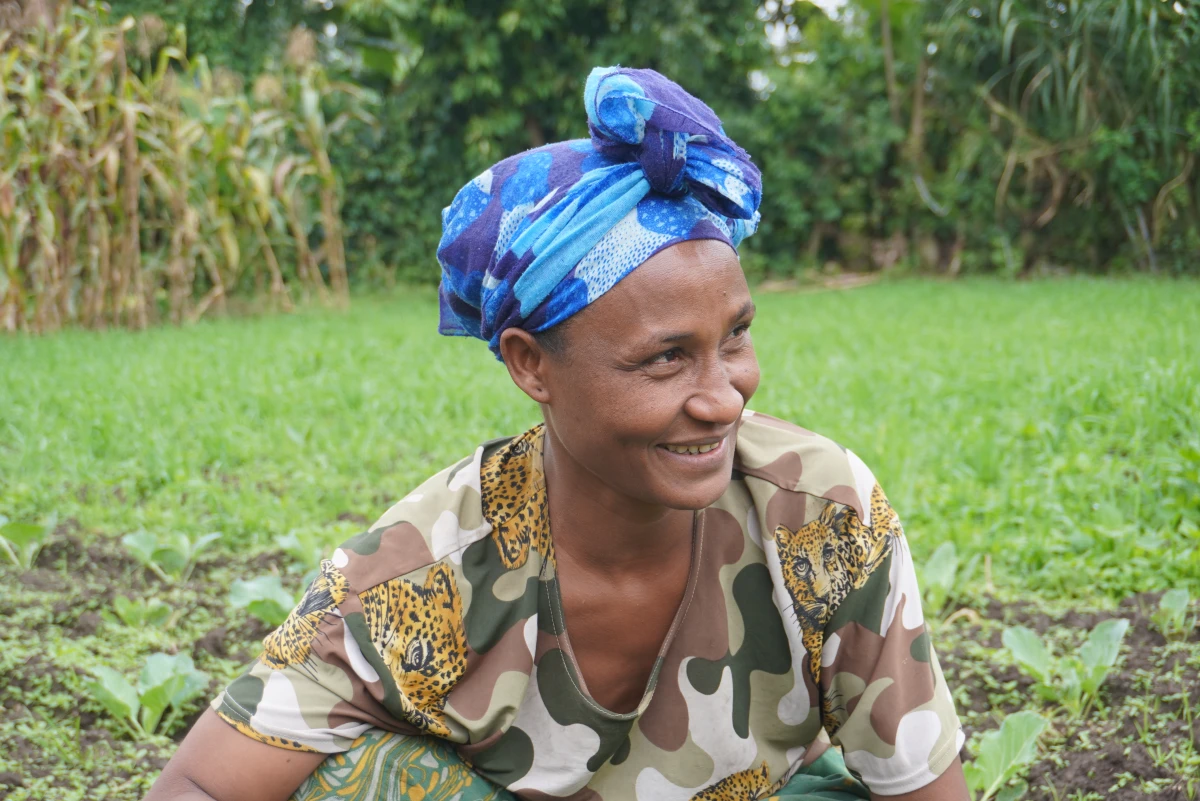
On World Soil Day, we reflect on the importance of protecting the ground we depend on. We celebrate colleagues and communities in Afghanistan, Cambodia, Czech Republic, Democratic Republic of Congo (DRC), Ethiopia, and Zambia who have adopted practices that protect and regenerate soil.
Knowing that the causes of land degradation vary across contexts, we partner with communities to work on solutions tailored to their specific regional challenges.
Feroza, Shukiba, and Mohammad Ali: Sustenance with seeds in Afghanistan
Three farmers, three distinct lives, all united by a common struggle. Feroza is raising four children on her own; Shukiba was denied an education and her dream of becoming a doctor; and Mohammad Ali, despite owning a large amount of land, struggles to feed his family.
These farmers live in Afghanistan's Ghazni province, where the land was severely damaged by years of conflict, extreme drought, and limited access to agricultural resources. We are helping them to rehabilitate irrigation systems and we are providing seeds, fertilisers, and tools to enable them to help themselves. Through their diligent work, the ground is once again green.
Reviving Zambian land with organic matter
Zambia has suffered its worst drought in 40 years. This environmental crisis has left fields dry and fallow. Crops failing to regenerate creates immense problems for local farmers contending with the intensifying impacts of climate change. Through sheer effort and the use of green farming practices, they are now harvesting better crops and breathing life back into previously damaged soil.
Nsamba is one such farmer who adopted the use of biogas technology, whose by-product – bio slurry – can be used as an organic fertilizer. His fields had become dry, forcing him to buy expensive fertiliser every month. After learning about the bio slurry, his situation changed. Now he enriches his land with organic fertiliser, and generates fuel for his family's cooking stove. These methods are climate smart and have saved him enough money to send his children to school.
Eco-briquettes for protection of Zambian forests
Forests are critical for maintaining soil fertility, preventing erosion, and regulating water cycles. Yet, they face intense pressure from slash and burn farming and shifting cultivation. Furthermore, traditional cooking methods, which rely on firewood and charcoal, accelerate deforestation.
We cooperate closely with rural communities to address deforestation by promoting alternative fuels. In rural Zambia, we have started to teach people to use the eco-briquettes, these are a sustainable fuel made from organic and agricultural waste.
How earthworms change the lives of Ethiopian farmers
Amarech Abera has always been a farmer. Like many in her area, she struggled with soil degradation, unpredictable rainfall, and rising temperatures. But when she discovered the power of earthworms, her farming—and her future—changed.
Amarech began vermicomposting—mixing dried leaves, banana plant material, and cow dung in a box with earthworms. In just 45 days, the earthworms transform this mix into high-quality organic fertiliser that can provide the soil with essential nutrients. She now harvests enough crops to sell a surplus at the local market; and is sharing her expertise with her neighbours.
Terraces keeping soil in place
Farmers in Ethiopia are also grappling with the loss of fertile topsoil, which is often washed away by heavy rains. Through conservation measures, Ethiopians are successfully preventing their precious soil from being lost.
To retain fertile soil in their fields, communities have built cascade terraces on hillsides. When heavy rainfall occurs, the soil that would otherwise be carried away is retained in the terrace structure. Farmers are cultivating crops and grass on the terraces to strengthen the structure and prevent collapse.
“When our soil was washed away, it settled in lower areas and produced good crops there. I organised people and started working on soil conservation,” says Shifa Mosa, a farmer. “If we destroy our land, we will destroy ourselves,” he adds.
How Bamboo Strengthens Roads and Prevents Deforestation in DRC
South Kivu in the Democratic Republic of Congo is home to the world's second-largest rainforest. Local populations rely on the forest for logging wood as cooking fuel which drives deforestation. However, a sustainable alternative exists: bamboo.
We have planted bamboo trees on steep hillsides below roads. The extensive root systems of the bamboo make the soil firmer, preventing erosion, and stabilising essential trade routes. Locals can use the bamboo wood for creating bamboo charcoal as a more sustainable alternative to forest wood.
Fertiliser: Enhancing the life of Cambodian soil
Cambodian soils face multiple challenges that directly affect productivity and long-term sustainability. Most agricultural soils are nutrient-depleted, low in organic matter, and highly acidic. This is particularly the case in rice-growing areas where farmers cultivate the same crop year after year.
Over time, intensive farming and overuse of chemical fertilisers have degraded soil health, reducing its ability to retain water and nutrients. Intensified droughts and floods, washing away topsoil and valuable nutrients.
In Cambodia, we support our partners in developing carbon-based fertilisers. They combine biochar made from rice husks—an abundant agricultural by-product—with organic nutrients like composted manure.

Cooperation towards a healthier Czech countryside
Drought, biodiversity loss, forest damage, barren fields, and erosion are the effects of climate change and poor agricultural practices. These are harming the Czech countryside and its soils. To strengthen local adaptation and mitigation efforts, we support sustainable agriculture, forestry, and natural resource management.
We foster cooperation between Czech farmers, municipalities, and experts to connect stakeholders who can improve the condition of the Czech landscape. One example of successful partnership is the creation of a wetland in Černovice. Developed through cooperation between the municipality and a local farmer, the wetland now retains water, bolstering biodiversity and soil fertility in the area.
Celebrating our local heroes
From the arid lands of Afghanistan to the lush forests of the DRC and the fields of the Czech Republic, local heroes show us that protecting the soil is vital in ensuring stable future.
The ingenuity and commitment demonstrated by these farmers reinforce our belief that the most effective solutions are those that are locally tailored, and community-led. On this World Soil Day, we acknowledge the importance of healthy soil, and those who put an effort into protecting the earth beneath our feet.


