
We are scaling up our efforts to help people survive Ukraine’s energy crisis
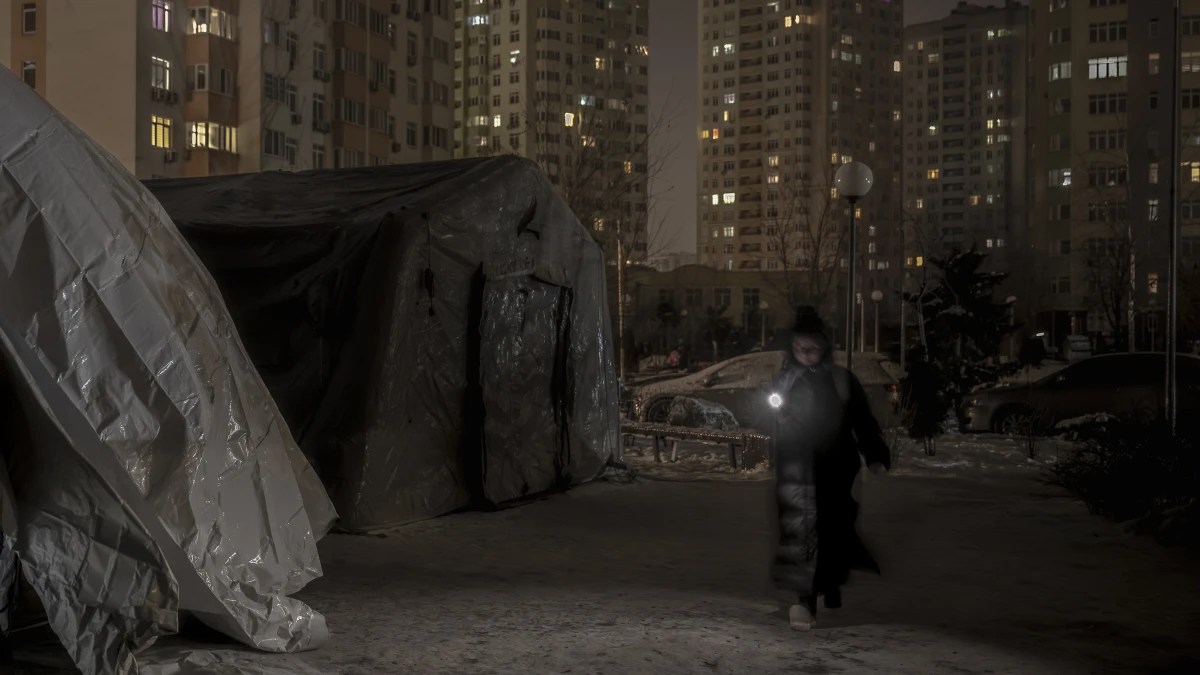
Published: Jan 26, 2026 Reading time: 3 minutes Share: Share an articleIn recent weeks, Russia has intensified its attacks on Ukraine’s energy infrastructure. On days when temperatures drop to minus 17°C, residents of major cities, including Kyiv, are left without electricity, water and heating. People are forced to endure freezing conditions in their homes, where indoor temperatures often remain at or below zero. To stay warm, families sleep in tents and wrap themselves in multiple layers of blankets, while missiles and drones continue targeting power facilities and cutting off access to life-saving services. This escalating crisis requires an urgent humanitarian response, and People in Need is expanding its support for communities affected by power and heating outages.
Over the past days, our team has been coordinating closely with the local responders, the State Emergency Service of Ukraine, the Ministry for Communities and Territories Development, the Kyiv City Council, the UN Office for the Coordination of Humanitarian Affairs (OCHA), and other partners to assess the most pressing needs.

In Kyiv, through the Points of invincibility, we are planning to provide residents with bottled drinking water and winter non-food kits – such as blankets, power banks, thermoses, and flashlights – to help people cope with heating and electricity outages. We also intend to supply batteries to the intensive care unit of the Kyiv Oblast Hospital to ensure uninterrupted medical care during blackouts. In parallel, discussions are ongoing on additional support for people with disabilities and those with limited mobility. We have also received numerous requests for technical equipment and are working to address these needs.

In Kherson, PIN plans to support 10 “Points of invincibility” with heaters and high-capacity charging stations. These points serve approximately 18,000–20,000 residents. We also aim to assist households without access to centralized gas supply by distributing small gas stoves, enabling families to cook during outages, and by purchasing electric blankets for older people living alone.

These actions represent only the first phase of our response. Our teams continue working closely with national and local authorities to identify priority needs and ensure assistance reaches those most affected. At the same time, we are preparing longer-term solutions to strengthen energy resilience.

People in Need has extensive experience in implementing energy-efficient and renewable solutions for communities. In 2025, we installed solar panels in 10 facilities providing essential services, including hospitals and water supply systems. We rehabilitated 44 water and sanitation systems serving 102,375 people and repaired 49 heating systems benefiting 112,093 people. We also launched a pilot project — the first combined solar and wind energy unit in the humanitarian sector — designed to ensure stable energy supply throughout the year.
This winter, we will support over 18,000 families with fuel and cash assistance for fuel purchases.
Ahead of a high-level humanitarian meeting in the European Parliament, where representatives of diplomatic missions, European institutions, and government agencies will discuss the humanitarian situation in Ukraine and continued international support, People in Need is organizing a dedicated event on energy resilience. The event will highlight that energy resilience — from emergency boiler repairs to solar power systems for hospitals and water infrastructure — is both a life-saving humanitarian intervention and a sustainable long-term solution that requires urgent scaling up and predictable funding.

Prolonged power and heating outages, combined with disrupted communications, affect not only physical safety but also mental health. For everyone in need of psychological support during these extremely difficult times, our 24/7 hotline remains available: 0 800 210 160.


