
Clean water in a crisis: Supporting households in flood-hit Zambia
Published: Mar 9, 2026 Reading time: 7 minutes Share: Share an articleAs flooding continues to affect farming communities across Zambia's Western Province, we are delivering emergency WASH and protection support to the families who need it most.
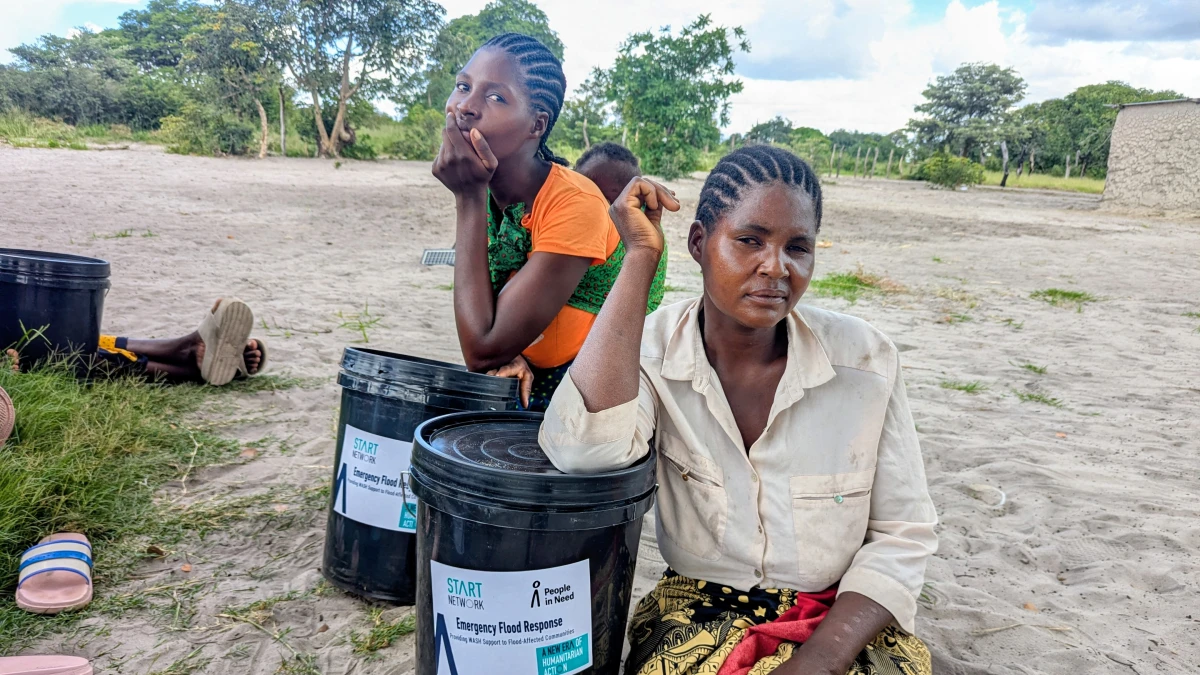
The rains came in December and have not relented. Across Zambia's plains and river valleys, water has risen into homes, over fields, through villages. In Shangombo District, in a remote corner of Western Province where most families depend on seasonal farming—the flooding submerged nearly 90% of cultivated land, destroying work that had taken an entire season to build.
Seven wards across the district were affected. In Simu Ward, where we focused our emergency response, the conditions tell a story that statistics alone cannot.
A Crisis Hidden in Plain Sight
According to Zambia's Disaster Management and Mitigation Unit (DMMU), more than 47 districts across the country have been affected by flooding this rainy season, with over 29,000 hectares of cropland destroyed. In Shangombo District alone, 5,123 farming households have lost crops across 2,360 hectares of farmland — losses expected to create serious food security deficits in the months ahead.
The District Commissioner for Shangombo, Mr. Mubita Siyamana, joined us for a distribution; described the situation plainly:
Many of the affected farmers had cultivated in the district's wetlands, areas now entirely submerged. Around 90% of farmland, he confirmed, has been flooded.

A response built around dignity
Following the activation of the Start Fund for the 2025–2026 floods in Zambia, our team, at People in Need Zambia, was confirmed as the lead organisation for emergency WASH operations in Shangombo District. We are working as part of a four-organisation consortium coordinated by World Vision UK, alongside Plan International and Catholic Relief Services.
Our response was built around carefully designed emergency WASH packs, with each item selected to address a specific need. Every household received a 20-litre bucket for safe water storage, chlorine for household water treatment, washing soap, bathing soap, toothbrushes, and toothpaste. Sanitary pads were distributed to women of childbearing age, with quantities adjusted according to the number of eligible women in each household.
The attention to household composition extended across the entire distribution process. The selection criteria for benefiting households also reflected a deliberate commitment to reaching the most vulnerable. Priority was given to households with persons with disabilities, female-headed households, and child-headed households.
Emergency WASH Package — Contents Per Household
• 20-litre bucket for safe water storage
• Chlorine for one month of household water treatment
• Washing soap and bathing soap
• Toothbrushes (quantity per household member) and toothpaste
• Sanitary pads (quantity per woman of childbearing age in household)

Protection at the Centre
Protection is fully mainstreamed in all our interventions. This reflects our understanding that emergencies create heightened vulnerability not only to disease but to gender-based violence and other protection risks.
We trained fifty community-based volunteers over two days in collaboration with government departments before our distributions began. The Ministry of Community Development supported the protection component of the training, while the Ministry of Health provided guidance on hygiene promotion and correct chlorine dilution procedures.
Volunteers are now conducting door-to-door sensitisation across all six communities in Simu Ward. In addition to promoting safe water and hygiene practices, they are identifying and supporting cases of gender-based violence and other protection concerns. We have clear referral pathways, reinforced during training, that enable volunteers to direct cases to the police, the Ministry of Community Development, or health facilities as appropriate.
A Community Feedback and Response Mechanism (CFRM) is also in place at each distribution site. Feedback cards displaying hotline numbers have been made available to participants, with information translated into Lozi to ensure accessibility for all community members. All complaints, concerns, and feedback can be directed to us directly through these channels.

Voices from the Ground
Lubinda Sikota Kandela has taught in his community in Simu Ward for years. When flooding disrupted daily life across the district, his household was among those at risk. Receiving a WASH package, he reflected on what it meant.
Kashweka Mboma is a farmer in the plains of Shangombo District. This season, her fields, like thousands across the district—were submerged. Crops destroyed. The harvest that was meant to carry her family through the coming months, gone. Kashweka noted that "it is indeed true that our fields in the plains were completely flooded and crops destroyed. Hunger is looming in our homes. But I am grateful for this assistance—I did not expect it."
Kashweka's words carry a weight that goes beyond this emergency. She names the compounding nature of a flood crisis: a single disaster setting off a chain of consequences, lost income, food insecurity, health risks—that outlast the floodwaters themselves.

The Road Ahead
We conducted distributions in six communities in Simu Ward: Liko, Kashabati, Mboiwa, Liyuwayuwa, Musa, and Kapengela. In total, 1,000 households received emergency WASH packages—representing thousands of individuals whose access to safe water and hygiene was strengthened at a critical moment.
This response addresses the most urgent public health risk. But as the District Commissioner and community members have made clear, the food security challenge facing Shangombo is real and will endure beyond this emergency. 5,123 farming households and 2,360 hectares of cropland have been lost and the scale of agricultural destruction in the district points to acute needs in the months ahead.
We will continue to monitor the situation across Zambia and advocate for sustained donor attention to under-the-radar crises—emergencies that are no less devastating for their absence from international headlines.
Response at a Glance
• 1,000 households reached across Simu Ward, Shangombo District
• 6 communities: Liko, Kashabati, Mboiwa, Liyuwayuwa, Musa, Kapengela
• 50 community-based volunteers conducting WASH and protection campaigns
• Priority beneficiaries: households with persons with disabilities, female-headed and child-headed households
• Government partners: Ministry of Community Development, Ministry of Health
• Response period: 29 January–14 March 2026
• Consortium: World Vision UK (lead), People in Need, Plan International, CRS
• Funded by the Start Fund | Supporters: UK, Netherlands, Germany, Jersey, IKEA Foundation
About This Response
People in Need is responding in Shangombo District as part of a four-organisation consortium led by World Vision UK, funded by the Start Fund. The Start Fund is supported by the UK, Netherlands, Germany, Jersey, and the IKEA Foundation. The consortium also includes Plan International and CRS. The response runs from 29 January to 14 March 2026.


