
When CSOs build together, they go further
Published: Jun 22, 2026 Reading time: 4 minutes Share: Share an articleWhat happens when grassroots civil society organisations are given deliberately designed spaces to catalyse collaboration? Across Armenia and Moldova, two carefully designed approaches answered that question, with results that reached community halls, government ministries and a combined audience of thousands.
Two countries, one model
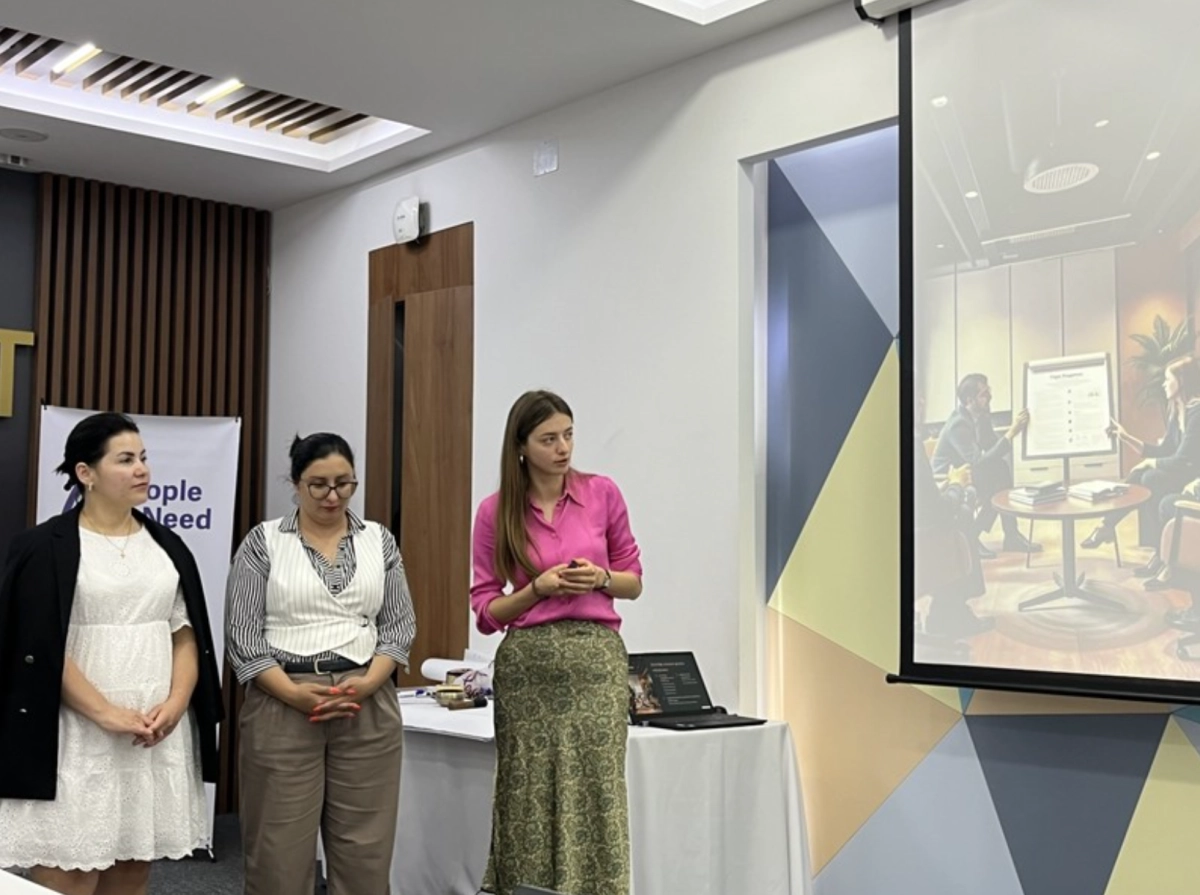
Between May and June 2025, we brought together 37 representatives of grassroots civil society organisations across two intensive Collaboration Labs, one in Chișinău, Moldova, and one in Aghveran, Armenia. Both events involved a fair degree of complexity in design and delivery, bringing organisations that had never worked together into structured space to find shared priorities and build trust from scratch.
Using speed networking, World Café discussions and collaborative design sessions, participants from ten Moldovan and nine Armenian CSOs mapped overlapping priorities, identified complementary capacities, and built the partnerships that would carry their work forward. By the end of each Lab, four collaboration teams had formed in each country — eight in total — and each team had developed a joint project proposal to apply for follow-on funding under the project’s sub-grants scheme.
The results of the satisfaction surveys conducted at the close of both Labs were striking. In Moldova, 94.7% rated the event as excellent for achieving its intended objectives. In Armenia, 84.2% felt fully prepared to move into joint project work immediately.

What the collaborations produced
In Armenia, the four collaboration teams went on to implement joint projects that demonstrated the added value of collaboration: combining expertise, resources and networks allowed grassroots CSOs to pursue more ambitious community and policy objectives than any single organisation could reach alone. One team of three organisations delivered a youth advocacy campaign that reached 8,000 people and submitted a joint set of policy recommendations on the Law on Youth to relevant authorities. Another team submitted a policy package directly to the Governor of Armavir Province, the Minister of Environmental Protection and the Minister of Health.
In Moldova, the four collaboration teams produced results of comparable scale. One team signed a formal agreement to establish a joint initiative on the prevention of gender-based violence, going on to map referral pathways across two districts and develop a bilingual support guide that has now reached hundreds of women, including refugees. Another team delivered an AI literacy programme reaching schoolchildren in a rural community.

Building connections across borders
In November 2025, the project extended this logic across national borders. Nineteen CSOs from Armenia and Moldova gathered in Yerevan for a Regional Networking and Cooperation Event, many meeting peers from the other country for the first time. Through a structured process of networking, peer exchange and thematic discussions, participants developed a deeper understanding of each other’s work, identified common challenges and complementary strengths, and organised themselves into four cross-border thematic collaboration groups focused on youth, elections and disinformation, inclusion and the environment.
Despite operating in different national contexts, many participants found common ground in the challenges, priorities and aspirations they shared. That recognition became a foundation for solidarity and future cooperation across the two countries.

A model worth building on
The project was funded by the European Union’s Directorate-General for Neighbourhood and Enlargement Negotiations (DG NEAR) under the Resilient Civil Society in the Eastern Partnership Region initiative, implemented by PIN between 2024 and 2026.
The case study points to a clear lesson: collaboration between organisations does not happen simply because people invest in relationships. It happens when conditions for collaboration are intentionally created through structured facilitation, participatory methodologies and concrete opportunities for joint action.
The national Collaboration Labs and the regional networking event are complementary approaches that generated different types of outcomes at different levels, within countries and across borders.
Both are worth replicating.


