
Angola Verde: small choices for environmental transformation
Published: Aug 26, 2026 Reading time: 3 minutes Share: Share an articleIn Angola, students and teachers are transforming schools into vibrant spaces for environmental learning. Through our Angola Verde project, lessons about nature and ecology are no longer theoretical subjects. Young Angolans are planting trees, separating waste, and understanding that small choices can contribute to a more sustainable future for everyone.
In many Angolan schools, talking about the environment means talking about challenges that children know well: litter scattered in the streets, inadequate waste treatment systems, degradation of green spaces, and climate change that directly affects communities.
In this context, the Angola Verde Project was born. Through training, practical participation, and involvement of schools and communities we have developed knowledge, green skills, and environmental awareness among children and young people.

From theory to practice
In Viana, a municipality located in Luanda province, the process began with strengthening the capacities of 27 teachers. In 2026, teachers and school principals participated in training on environmental education, waste management, climate change, water resources, and basic sanitation.
Teacher training is fundamental because it ensures that knowledge doesn't end with the project itself. A teacher becomes a multiplier, capable of bringing environmental content to different subjects and to the daily life of the school.
In the classroom, children learn the fundamentals of protecting nature. But the real impact appears when this knowledge is put into practice.
The school as vegetable garden
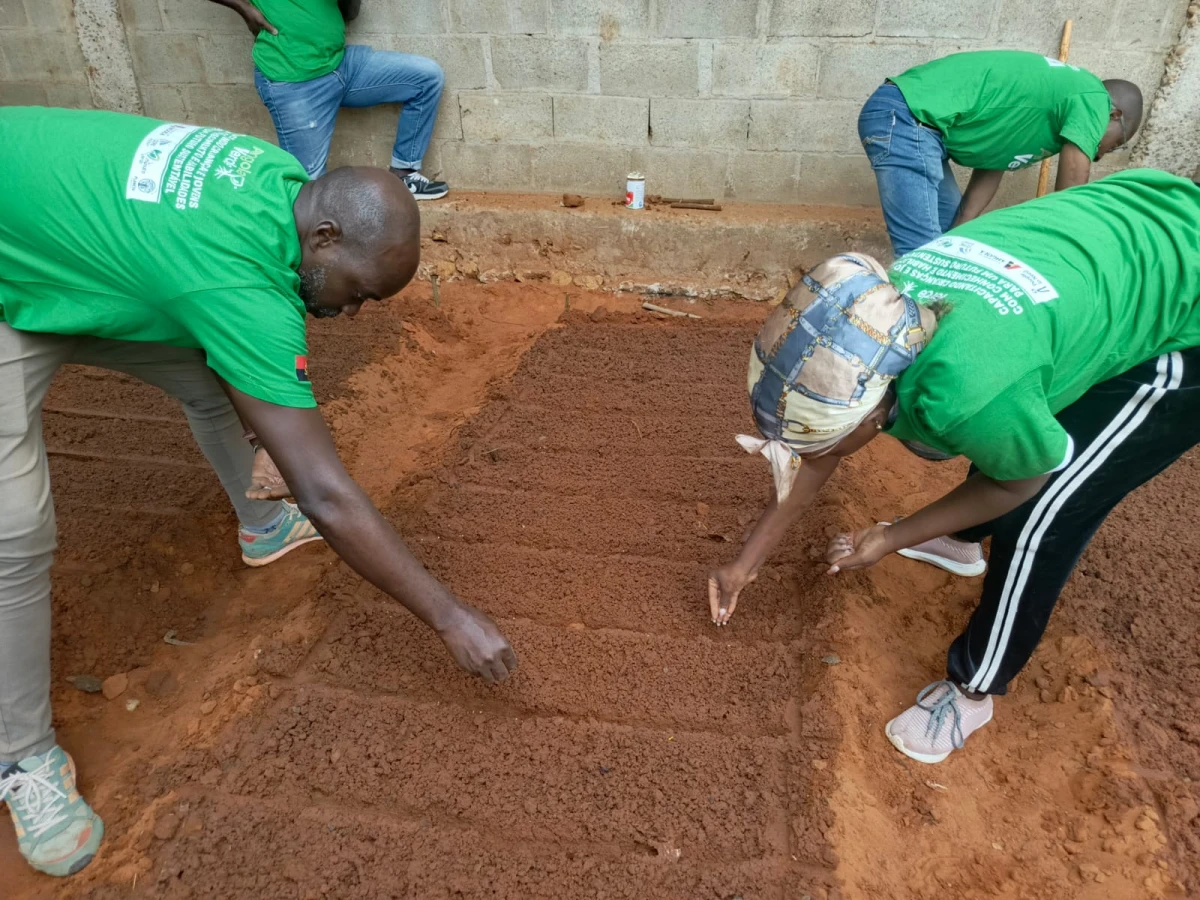
In Huambo, students created 3 school gardens. At São João School No. 102, students and teachers participated in preparing seedbeds for growing tomatoes, cabbage, peppers, and eggplant. The activity allowed the children to directly follow the production process: preparing the soil, sowing, watering, caring for the plants, and observing their growth. Thus, the vegetable garden has become a true outdoor classroom.

The experience also brings environmental education closer to an issue that is essential for Angola: food security. Planting seeds is a lesson in responsibility, and the future.
Trash: A tool for learning
Another important aspect of the Angola Verde programme is solid waste management. Children learn that trash shouldn't simply be thrown on the ground or mixed together. How to recognize different types of waste? Why separation is important? This learning culminates in practical exercises with 6 recycling points, allowing students to learn by doing. A simple change has potential to transform behaviour. When a child learns where to put a bottle, packaging, or other waste, they begin to understand that waste management is a collective responsibility. And when they take that knowledge home, they can become an agent of change within their own family.
The impact of environmental education does not have to end at the school gates. Almost 100 children participating in the project can influence their peers, siblings, parents, and communities.

An investment in the future
Angola Verde demonstrates that through environmental education it is possible to learn about climate change in a classroom—it is also possible to learn about sustainability while planting cabbage. Participants learned to talk about recycling, and to learn how to separate waste at a recycling point. The programme showed participants the importance of environmental responsibility, and allowing children to tend a vegetable garden daily.
The link between knowledge and practice within Angola Verde gives the project a particularly relevant dimension. The school with the vegetable garden, a recycling point, and environmentally conscious children are steps to prepare a community for the future.


