
Continued support to children and families in Gaza
Published: Sep 7, 2026 Reading time: 10 minutes Share: Share an articleThe humanitarian situation in the Gaza Strip is critical. People across the strip remain confined to one third of the territory. Despite the ceasefire they endure continued bombardment and displacement. Widespread destruction of civilian infrastructure, overcrowding, inadequate shelter, and limited access to healthcare, food, safe water, and sanitation continue to drive humanitarian needs.
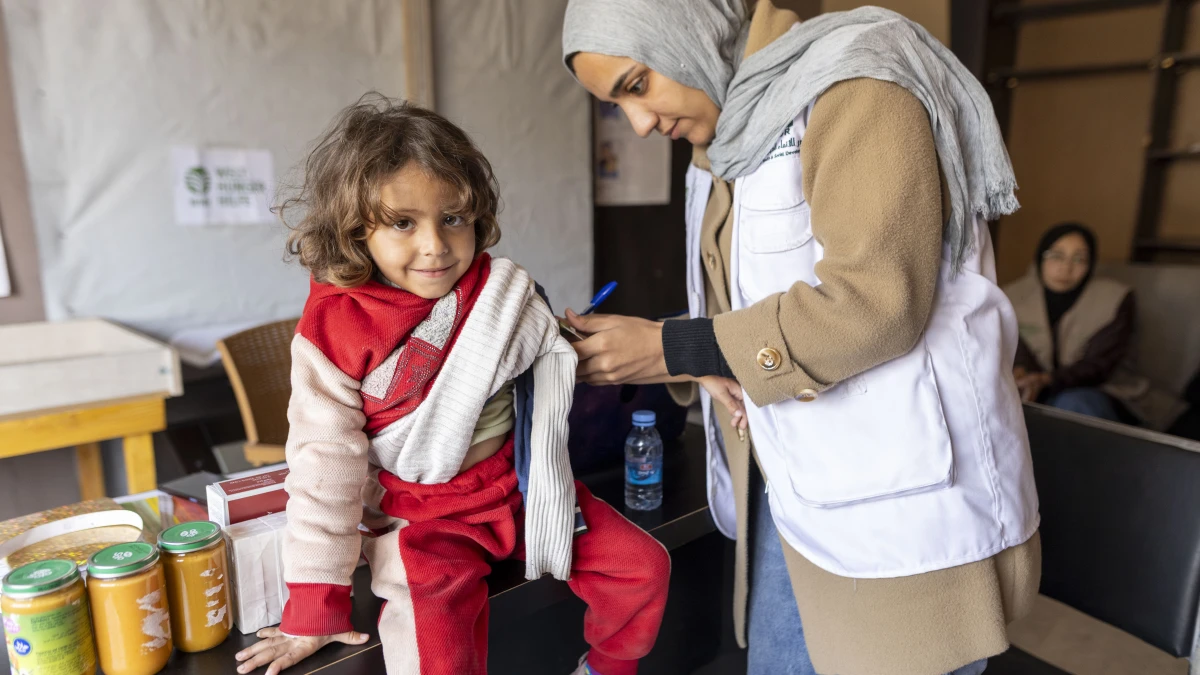
During the last year, we, and our partners, supported nutrition centres that screened people for malnutrition and provided treatment; we established community baking ovens that allow families to bake fresh bread; we distributed food vouchers; and, we provided people with access to drinking water. Our partners also provided psychological first aid to children and their families. Now we are supporting three Temporary Learning Spaces for 1,000 children.
Crisis-level food shortages for entire Gaza
Although food has become more available in Gaza following the 2025 ceasefire, supplies are well below required levels, and many families still cannot afford to buy enough food because they have lost their livelihoods. Incomes remain extremely limited, and food prices are high. Despite some improvements in food security the threat of acute malnutrition remains.

“Our children are suffering severely from malnutrition. Their needs are beyond description. Life in the camp is extremely difficult. There is a lack of water, proper shelter, and even the sand we lay on is unsafe for children.” describes one mother from Gaza.
The latest IPC analysis shows that the entire population of Gaza is enduring crisis-level food shortages, with around 1.4 million people expected to face high levels of acute food insecurity through the end of 2026. Acute malnutrition among children has declined following the growth in nutrition programmes.
Prevention and treatment of malnutrition
Together with our Alliance2015 partners: Welthungerhilfe (WHH) and CESVI, and our local partner JUZOOR, and with funds from the Ministry of Foreign Affairs of the Czech Republic and our SOS Gaza Emergency Appeal we contributed to prevention and treatment of malnutrition as well as strengthening of food security in Gaza.

The teams of three supported nutrition centres screened 7,909 pregnant and lactating women and children under five for malnutrition. Out of these 444 women and 364 children received treatment for malnutrition. “My daughter became ill, so I took her to the Juzoor clinic. They examined her, and confirmed that she was malnourished. They also closely monitored my daughter’s condition, provided treatment and nutritional supplements and, thankfully, she is now better,” says Walaa Raed Al Ghoti.

Additionally, 9,658 people participated in nutrition awareness sessions. “We organised many awareness sessions for pregnant women, breastfeeding mothers, and children,” says Alaa Basal, a nurse at of the centres.
During the last year, our Alliance2015 partners WHH and CESVI and our local partner JUZOOR delivered vital nutrition, food security, and water, sanitation and hygiene assistance to the people of Gaza.
- 7,909 pregnant and lactating women and children under five screened for malnutrition.
- 444 pregnant and lactating women were treated for malnutrition.
- 364 children under five were treated for malnutrition.
- 9,658 people attended nutrition awareness sessions.
- 773 displaced families regularly accessed two community ovens to bake their own bread.
- 60 vulnerable families received food vouchers.
- 10,833 people across 23 locations gained regular access to safe drinking water through water trucking.
- We rehabilitated 5 water, sanitation and hygiene facilities serving 1,580 people every day.

Mothers found support, guidance, and a moment to reconnect with their babies in WHH’s Mother and Baby areas. They participated in breastfeeding counselling, group sessions on nutrition and care and had access to nutritious food, clean water, a healthy environment. “Today’s session focused on mental and reproductive health. We learned how to manage our well-being during pregnancy and how psychological stress can impact us after giving birth. Since postpartum depression is probable, we learned the importance of finding healthy ways to vent in order to feel better,” says Um Mohammed, a mother receiving support.
Helping families bake their own bread
According to UNICEF reports many families in Gaza are forced to buy cheap, less nutritious food, eat smaller meals, skip meals altogether, or have parents go hungry so that children can eat—clear signs that families remain under severe food stress despite improvements in humanitarian access. To further enhance food security WHH opened two community baking ovens in the Khan Younis camp for internally displaced people.

People prepare dough at home and take it to the community oven. Once there, bakers helped families bake fresh bread and other products. 773 displaced families regularly visited community baking ovens to bake their own bread.
“Baking is expensive. It costs about one shekel for just three loaves of bread. For a family of 10 or 15 people, what they are supposed to do? They would need at least 300 shekels a month just for baking,“ says Moamen Abu Ta’ima, a baker at the Community Baking Oven.
Beyond food security, these ovens preserve dignity as families prepare their own food rather than relying on humanitarian aid. The ovens also provide livelihood opportunities because the bakers are recruited locally.
Nutritious food for 60 families
Additionally, WHH provided 60 families with food vouchers. “We were displaced from Sheikh Radwan and moved from one place to another before finally settling in Al-Maqousi. I followed up on my daughter’s condition at one of WHH’s nutrition clinics, and thankfully, her health has improved significantly. Recently, I received a message from WHH informing me that I was eligible for a food voucher worth 500 shekels. The voucher allowed me to purchase a range of nutritious food, including meat, legumes and cheese,” says Walaa El-Ghooti.

“The food available through this food voucher has been carefully selected to meet the specific caloric requirements of each individual. It includes essential, nutrient-rich foods that are often difficult for vulnerable families to afford, helping them support the recovery and well-being of malnourished household members,” explains Hassan Dawoud, WHH volunteer.
Drinking water for more than 10,000 people
Access to safe water remains one of the most urgent humanitarian challenges in Gaza. Despite expanded emergency water trucking and repairs to damaged infrastructure following the ceasefire, most households lack sufficient water to meet their daily needs.
According to UNICEF, around 1.5 million people are receiving emergency drinking water, yet more than half of Gaza's population has access to less than six litres of water per person per day for drinking and cooking—the minimum humanitarian standard. At the same time, over 70% of the population relies on trucked water, as much of the water and sanitation infrastructure remains damaged or inoperable.

The lack of safe water and sanitation increases the risk of diseases, skin infections, and other preventable illnesses, particularly among children living in overcrowded shelters.
Thanks to our support, our Alliance2015 partner, CESVI provided 10,833 people across 23 locations in Gaza with regular access to safe drinking water through water trucking. Their team also rehabilitated water, sanitation and hygiene facilities at 5 sites that serve 1,580 people every day.
Psychological first aid for children and their families
Today, nearly the entire population of Gaza—including more than one million children—is estimated to need protection, mental health support, and psychosocial care. The impact on children is profound. According to UNICEF more than 58,000 children have lost one or both parents, leaving many to cope with profound grief and uncertainty at a very young age. Additionally, children are exposed to severe risks due to displacement, economic hardship, and the ongoing humanitarian crisis.

With funds from our SOS Gaza Emergency Appeal, we supported War Child Alliance and its local partner in providing psychological first aid to children and their families. We contributed to child protection efforts by supporting a two-day refresher training for 30 Psychological First Aid (PFA) facilitators, strengthening their capacity to provide immediate emotional support to children and caregivers. As one facilitator shared: “The training enhanced my confidence and gave me practical skills to provide structured and effective support to children and families in distress.”
Between September 2025 and February 2026 our partner War Child Alliance and its local partner provided help for children, caregivers, and frontline workers affected by the crisis in Gaza:
- 30 Psychological First Aid facilitators trained
- 300 households reached through home visits, PFA sessions, and case assessments
- 2,776 people supported, including 836 children
- 207 vulnerable children received case management and psychosocial support
- 22 recreational and psychosocial activity days organised
- 1,540 children participated in recreational and psychosocial activities
- 661 caregivers received psychosocial support alongside their children
- 50 frontline facilitators completed a peer support and wellbeing programme
Following the training, PFA and case management teams visited 300 households, they also provided PFA sessions, and case assessments to 2,776 individuals—including 836 children. These efforts helped identify children and families facing heightened protection risks, including those separated from caregivers or exposed to severe hardship. The PFA sessions provided immediate emotional support while identifying children in need of longer-term care.

207 children received case management and psychosocial support, alongside essential assistance such as food, hygiene kits, clothing, and school supplies. One 11-year-old child reflected: “After losing my parents, I felt alone. Your help, including these clothes, brought me comfort and reminded me that I am not alone.”
Taking care of ourselves helps us take better care of our families
With funds from our SOS Gaza Emergency Appeal, War Child Alliance and its partner organised recreational and psychosocial support activities across seven camps for displaced people across Gaza. A total of 22 activity days reached 1,540 children aged 3–17, alongside 661 caregivers, providing safe spaces for play, emotional expression, and psychosocial support.

The activities included interactive group games, art therapy, cooperative competitions, puppet and clown performances, theatre or face painting, all designed to promote children's wellbeing, resilience, and positive social interaction while helping caregivers strengthen supportive relationships with their children. As one child shared: “Participating in the activities makes me feel happy and free, helping me cope with challenges and reconnect with a sense of joy.” Another caregiver reflected: “The activities provided relief and reduced my stress, as seeing my children play and laugh again brought me a sense of calm and comfort.”
Caregivers told us about the improvements in communication with their children and how this gave them greater confidence in supporting them through ongoing challenges. One father noted: “Participating in the recreational activities relieved my stress and helped me learn better ways to interact with my children. It reminded me that fathers also need support, and that taking care of ourselves helps us take better care of our families.”

Additionally, we also supported a two-day peer support and wellbeing programme for 50 facilitators working with children and families in Gaza. The sessions focused on stress management, burnout prevention, self-care, and strengthening peer support to help frontline staff cope with the emotional demands of their work.
Through interactive activities and group discussions, facilitators built practical coping skills and reinforced their resilience. As one participant shared: “The sessions strengthened peer connection, increased motivation, and improved my ability to cope with work-related demands.”

Facilitators reported feeling better supported and more confident in continuing their work with vulnerable children and families. One participant reflected: “Working closely with children and families in challenging circumstances can be emotionally exhausting. These peer support activities helped me relieve stress and regain the energy needed to continue my work.”
Supporting the people of Gaza
We have been providing aid to the people of Gaza since December 2023. Since then, we have supported tens of thousands of people thanks to emergency funds raised through our People in Need Club of Friends and our SOS Gaza Emergency Appeal.
In April 2024, we launched the SOS Gaza Emergency Appeal. To date, the appeal has raised more than €300,000, (CZK 7.8 million) and fundraising continues. At present, we are supporting three Temporary Learning Spaces for 1,000 children in Gaza.


