
Honorary Forest Officers: Community and conservation in Zambia
Published: Jun 16, 2026 Reading time: 5 minutes Share: Share an articleForests cover more than 60% of Zambia’s land area and provide vital natural resources that sustain livelihoods, climate systems, and biodiversity. Yet only a small portion of forests are formally protected, leaving vast areas without adequate monitoring and protection.
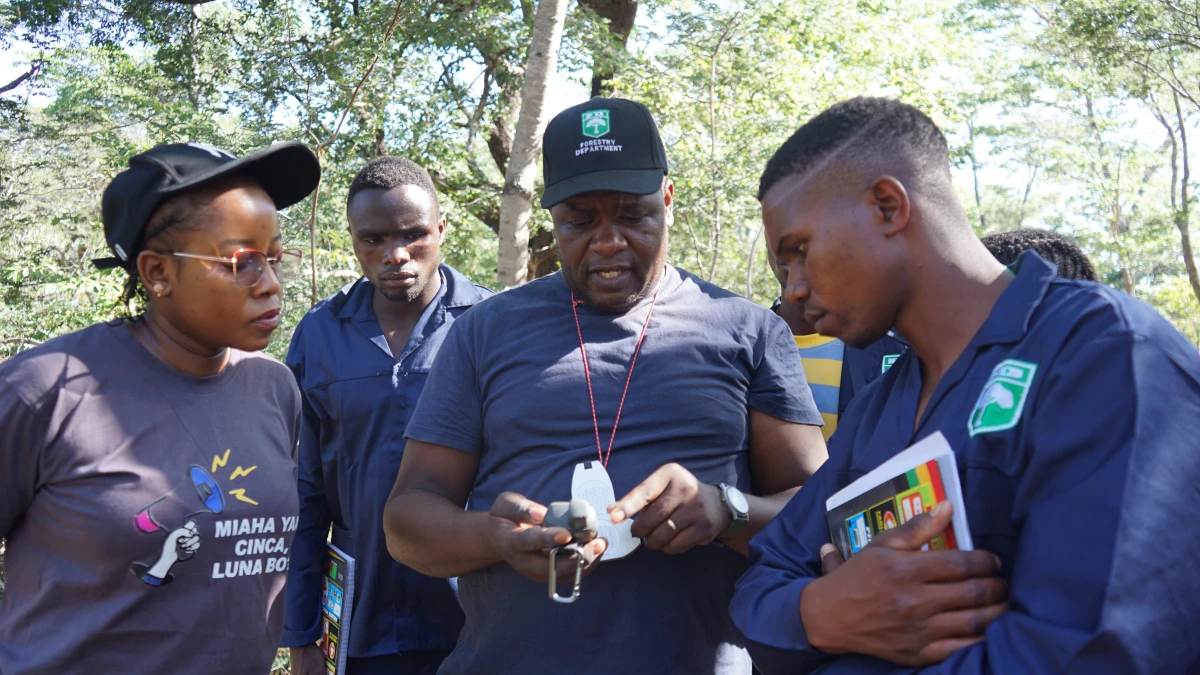
In Mongu District, Western Province, a new approach is helping to protect forests. At a gathering at Nakanyaa Secondary school, 29 men and women stood in matching uniforms to be formally appointed as Honorary Forest Officers (HFOs). Coming from all walks of life, these HFOs have been entrusted with the important task of safeguarding the forests that nourish and sustain their communities.
Their appointment marks an important milestone under the Jersey Overseas Aid (JOA) and Czech Aid supported project Enhancing Livelihood Opportunities through Ecosystem Protection in Barotse Floodplains.
Responding to a changing landscape
Across the Barotse Floodplain, forests and rangelands support daily life. They contribute to agriculture, livestock, fisheries, and provide essential resources such as food, fuel, and traditional medicine.
However, these ecosystems are coming under increasing pressure. Unsustainable land use, population growth, agriculture expansion, and climate change are threatening both biodiversity and the livelihoods that depend on it.
In response, and in cooperation with World-Wide Fund for Nature Zambia (WWF), we are working to promote community driven conservation, recognising that lasting solutions depend on the involvement of local communities.
We work with communities to strengthen livelihoods and reduce pressure on forest resources. We are supporting local enterprises such as bee keeping and promoting clean energy solutions like eco-briquettes, improved cookstoves, and biogas. Complementing this, WWF works with the same communities by strengthening forest governance systems, including developing capacities of Community Forest Management Groups (CFMGs) and HFOs.
By linking forest protection with practical livelihood alternatives, this we are helping ensure that conservation efforts are not only enforced, but sustainable. Our partnership builds resilient communities that can adapt to climate change and sustainably manage natural resources for themselves.
As Marta Kaniewska, Head of Systems and Operations at People in Need Zambia, highlights:
Strengthening community roles in forestry governance
Limited enforcement capacity remains a key challenge in forest management across Zambia, including shortages of personnel and limited formal roles for communities.
The training of HFOs strengthens community‑level capacity for monitoring, reporting, and protecting forests within designated areas.
Over nine days of intensive training, community members from the Mbuta, Malumbwe, and Sanongo CFMGs in Mongu, Western Province gained practical and legal knowledge to carry out their roles effectively.

The training, delivered by the Forest Department under the Ministry of Green Economy and Environment, the Department of National Parks and Wildlife, the Zambia Police Service, and Ministry of Health, covered forest and wildlife laws, basic First Aid, community-based governance, patrol methods, reporting systems, and how to coordinate with relevant authorities.
In addition to training, practical support was provided to strengthen field operations. A total of 29 bicycles and 3 first aid kits were distributed to the officers. The bicycles improve mobility across remote terrain and enabling more frequent and responsive patrols.
A role rooted in community
Unlike traditional enforcement officers, HFOs work directly within their communities. This close connection allows them to understand local economic realities linked to natural resource use.
Their role goes beyond enforcement, and combines this with awareness-raising, community engagement and promoting sustainable practices that support long-term behaviour change.

As Kalimukwa Mate, a newly appointed Honorary Forest Officer, says:
A New Chapter in Community Forestry
The graduation and passing‑out ceremony in Mongu marked a significant milestone for the local communities. The addition of the 29 HFOs will support the management and protection of 28,933 hectares of community forest, contributing to broader community-led ecosystem management efforts.
Officiating the ceremony, Western Province Permanent Secretary, Mr. Simomo Akapelwa, highlighted the broader significance of the initiative:
“The protection of forests and rangelands is not only an environmental issue. It is a development imperative. Resolving these challenges requires collective action from all stakeholders.”

The presence of government representatives, members of the Barotse Royal Establishment (BRE), and conservation partners underscored the importance of collective ownership and coordinated action in addressing both environmental and livelihood challenges.
Balancing authority and community roles
As newly appointed HFOs return to their communities, they take on multiple responsibilities. They are expected to identify and report illegal activities, promote sustainable practices, and engage directly with their community in conservation efforts.
Their role requires technical knowledge, fairness, and integrity, ensuring a balance of formal responsibilities with existing social relationships.
Their success is closely linked to broader efforts within their communities, where improving livelihoods and access to alternative energy sources can help reduce reliance on forest resources and support sustainable practices.
Strengthening systems from the ground up
The training and appointment of HFOs contribute to broader governance systems. Working through CFMGs supports:
• Local accountability
• Participatory decision‑making
• Coordination between traditional leadership, government, and communities
This approach supports locally-led systems for managing natural resources.
As WWF Zambia’s Country Director, Nalucha Ng'anga-Ziba notes:
“This is more than a ceremony; it is an investment in people and in the systems that will sustain conservation into the future.”
A foundation for lasting resilience
Environmental and livelihood challenges in Western Province remain complex. However, this initiative shows how collaboration and community involvement can strengthen resource management over time.
What is unfolding in the western part of Zambia is a clear demonstration of communities taking a more active role in protecting their own natural resources and future.
Through our work with HFOs we are supporting communities in protecting their environment and building sustainable livelihoods and resilience in the face of climate change.


