
Turning the tide for a better future: Jessa’s sustainable seaweed farming
Published: Jul 30, 2026 Reading time: 4 minutes Share: Share an articleIn Tawi-Tawi, the Philippines, seaweed farming is one of the few reliable sources of income. Women and young people often work alongside their parents, and children often leave school at a young age, to help support the household.
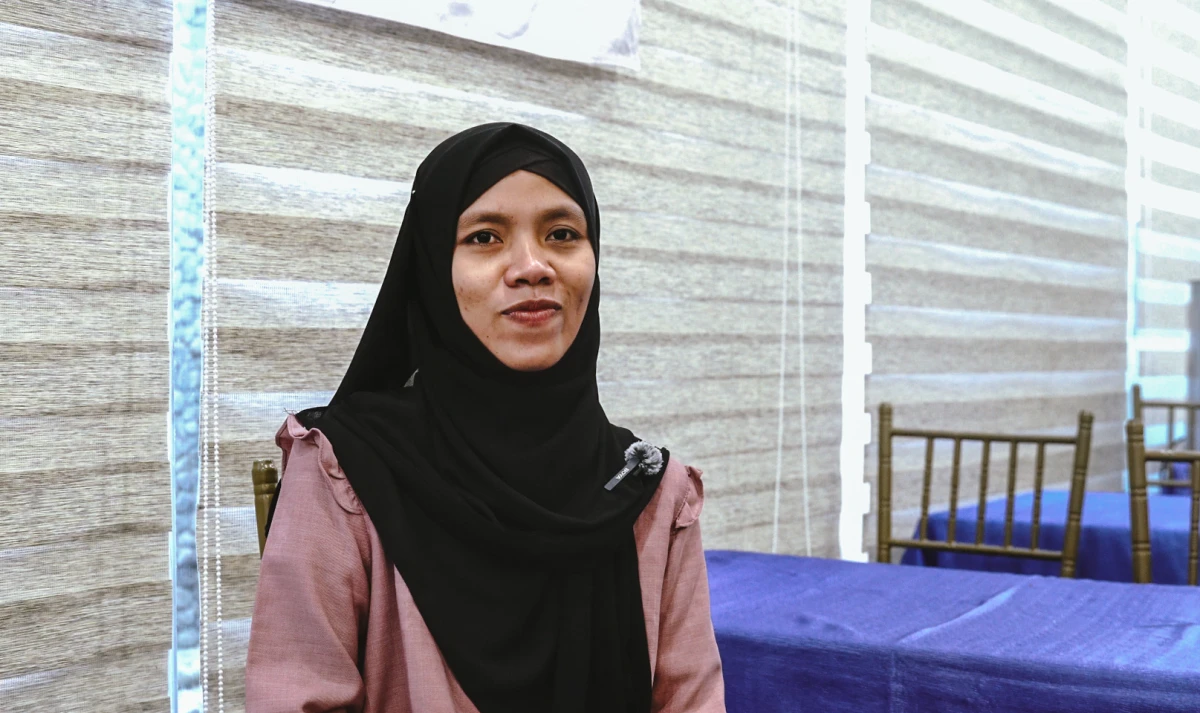
Jessa Muhammad was still in primary school when she first waded into the shallow waters of Tawi-Tawi to help her father farm seaweed. As the eldest of three siblings, she tied seedlings, hammered stakes into the seabed, and stretched cultivation lines across the water. This work is physically demanding and usually left to men in her community.

Now, Jessa has spent most of her life following the rhythm of the tides. Like many seaweed farmers, she learned by following practices passed down through generations. It was only recently that she realised some of those methods were limiting both their harvest and their future, a realisation that would eventually see her teaching the very people who first taught her.
Life by the Sea
Jessa and her community farmed the way generations had done before them. They secured seedlings with single-use ties and applied inorganic fertiliser to speed up growth, hoping for quicker harvests and higher earnings, unaware that these practices affect both the crop and the sea.

Effects beyond the surface
For years, single-use plastic soft ties and inorganic fertiliser were common among seaweed farmers. But, research has found that these methods come with hidden costs. As plastic ties break down, they leave plastic filaments that contaminate raw dried seaweed and contribute to microplastics in semi-refined carrageenan products. These affect product quality and competitiveness in global markets. Inorganic fertiliser may accelerate growth, but it reduces seaweed quality and harms the marine environment.
For farmers, impacts manifest in lower prices, with buyers paying as little as PHP 50 (€0.70 ) per kilogramme.

Turning the Tide
Jessa’s neighbours encouraged her to join the Bangsamoro Agri-Enterprise Programme—Leveraging and Expanding Agri-Aqua Production in Bangsamoro (BAEP-LEAP).

One of the first changes Jessa took home was to replace single-use plastic soft ties with reusable polyethylene nylon loops, which can be reused for up to five years. Farmers also stopped using inorganic fertiliser to improve seaweed quality while reducing pressure on the surrounding marine ecosystem.

Without fertiliser, seaweed takes around 30 days to mature instead of 15. But the harvest is of higher quality and can sell for up to PHP 100 (€1.40) per kilogramme, double what farmers previously earned.
Beyond training, BAEP-LEAP also provided quality seedlings, seaweed nurseries, demonstration farms, and production inputs, to help lower the cost of starting or expanding seaweed farming.
Changing the Current
Before adopting the new practices, Jessa's family could only afford to send one child to school. Today, she and her two younger siblings are studying at the same time.

Jessa also shared with her parents why the traditional methods no longer served them. They listened. And they changed.
Carrying the Waves Forward
Today, Jessa is helping protect the environment her community depends on while encouraging other farmers to adopt practices that improve their livelihoods and the quality of their harvest.
Funded by the European Union and implemented by our team at People in Need Philippines in partnership with Maranao People Development Center Inc. and United Youth of the Philippines-Women, BAEP-LEAP introduced improved farming practices informed by its report: Assessment of the Seaweed Value Chain in Sulu and Tawi-Tawi, which identified key constraints affecting productivity and market value.


