
Invisible pollutants, visible consequences: Supporting clean air in Bosnia and Herzegovina
Published: Apr 24, 2026 Reading time: 3 minutes Share: Share an articleThe air we breathe is not always what it seems. While thick winter smog often draws public attention, air pollution in Bosnia and Herzegovina is present throughout the year—frequently in the form of invisible but harmful pollutants that affect both our health and the climate.
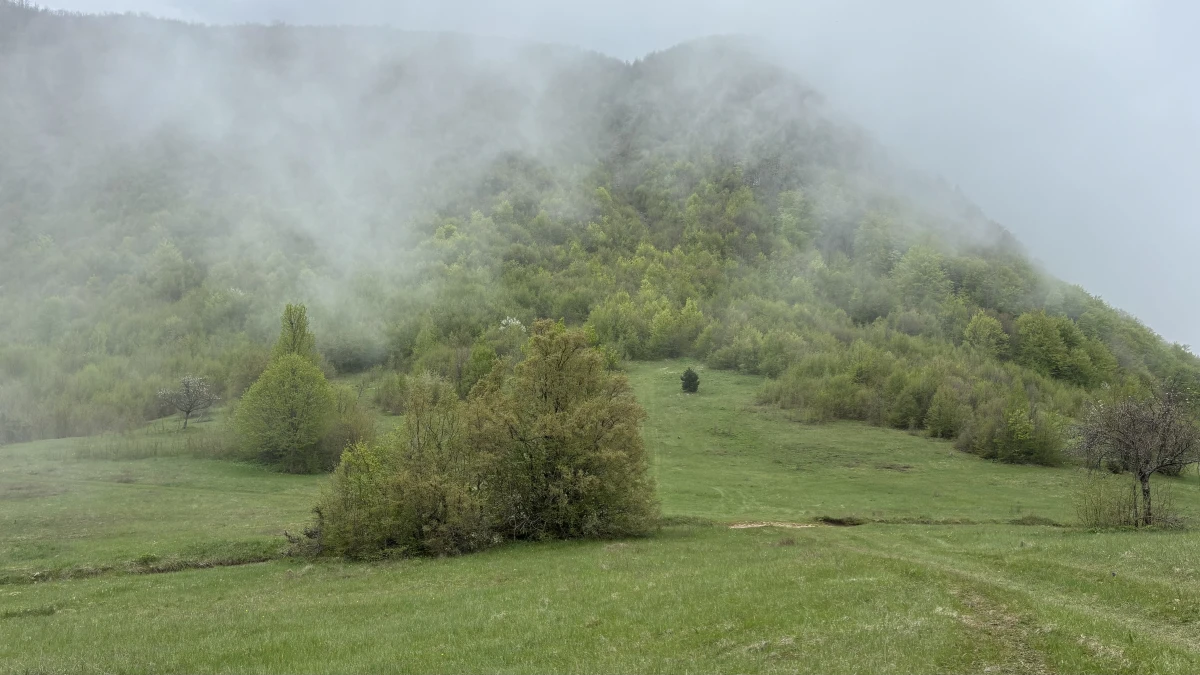
To bring citizens and decision-makers closer to these issues, we produced a series of three short videos on short-lived climate pollutants (SLCPs), their impacts, and the solutions that are being implemented across the country. SLCPs include methane, black carbon (soot), ground-level ozone, and hydrofluorocarbons (HFCs). Some are invisible gases, like methane from landfills and farming, while others, like soot from coal, wood, and diesel, form the smog we see in the winter. In Bosnia and Herzegovina, pollutants come from heating, traffic, waste, agriculture, and cooling devices—they directly affect the air we breathe, our health, and local food production.
Pollution we cannot see but can feel
SLCPs are substances that remain in the atmosphere for a relatively short time but have a much stronger warming effect than CO₂ and that cause significant harm to human health.
Bosnia and Herzegovina is working on plans to reduce SLCP emissions as part of global efforts towards cleaner air and a healthier future.
The example of the Spreča Farm
A practical solution to air pollution can be seen in the example of the Spreča Farm in Kalesija, where organic waste and manure are used to produce biogas. On this farm, organic waste and manure are used to produce biogas. Methane from livestock farming can pose a serious climate risk if unmanaged. However, as demonstrated on Spreča Farm anaerobic digestion in biodigesters can capture methane which can then be used to produce electricity and heat.
This practical example demonstrates how climate action can also support local development. The process not only reduces emissions but also produces high-quality organic fertiliser, closes the nutrient cycle and strengthens agricultural sustainability.
Composting as a simple solution with big impact
In collaboration with the Women’s Association Vrba, we demonstrate how composting organic waste can prevent methane emissions that would otherwise occur in landfills. Globally, around one-fifth of methane emissions originate from the waste sector, much of it from decomposing organic material.
Composting is a simple, affordable, and natural alternative to dumping. It reduces emissions, improves soil quality, and supports local food production. Vrba’s experience proves that meaningful climate action does not always require complex technology—sometimes it begins with knowledge, cooperation, and small routine changes.
From awareness to action
Clean air in Bosnia and Herzegovina is possible. Practices that reduce SLCPs are already in use in agriculture, waste management, energy production, transport, and households . Because SLCPs remain in the atmosphere for a short period, cutting their emissions will deliver rapid and tangible benefits: improved public health, stronger communities, and measurable climate gains.
Our aim is not only to inform but to inspire action.. Understanding the problem is the first step. Supporting and scaling up proven solutions is the next.
Cleaner air is not an abstraction—it is an achievable goal, and one we all have a responsibility to reach.
The project “Development of a National SLCP Plan, Methane Roadmap and MRV Framework in BiH” is funded by the United Nations Environment Programme (UNEP) and coordinated by the Climate and Clean Air Coalition (CCAC). The project is led by People in Need (PIN) in Bosnia and Herzegovina, in cooperation with the Ministry of Foreign Trade and Economic Relations of Bosnia and Herzegovina, and implemented together with partner organisations - the Center for Energy, Energy Efficiency and Environment (CEEO) and the Society for Tourism and Environmental Protection (STEP).
The content of this article and the videos is the sole responsibility of PIN and does not necessarily reflect the views of UNEP or CCAC.


