
Strengthening Afghan family-resilience with cash and livestock health assistance
Published: Apr 22, 2026 Reading time: 3 minutes Share: Share an articleYears of conflict, economic hardship, drought, and climate shocks have made it increasingly difficult for people to afford food and other necessities in Afghanistan.
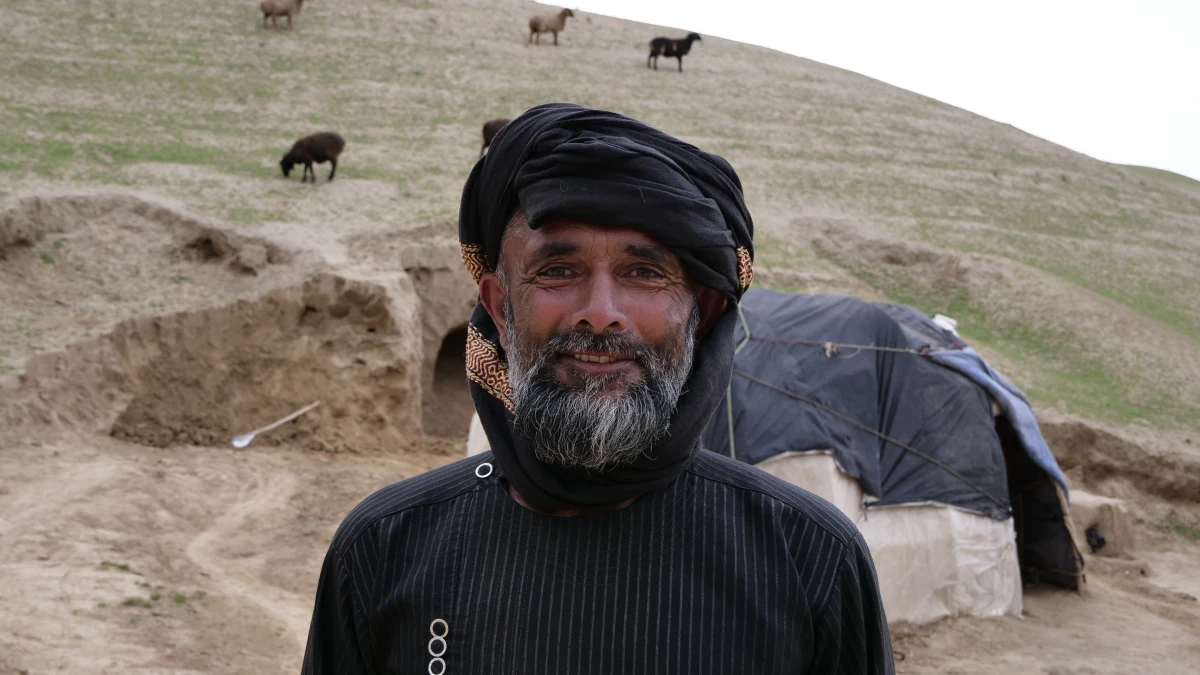
Rahmatullah (57) lives with his family of 11 in Kangori village, northern Afghanistan. Like many people in his community, he relies on daily labour to feed his family. Every morning, he goes to the city to look for work, but often returns empty-handed. “When I bring nothing, I feel shame in front of my family,” he says. “I cannot sleep. I keep thinking about the next day—how to find work and how to feed my children.”

Across Afghanistan, millions live in similar situations. According to the World Food Programme (WFP), 17.4 million people are projected to face acute food insecurity, including 4.7 million at emergency levels of hunger. Malnutrition among women and children is also expected to affect nearly 5 million people in 2026.
Helping families with cash-for-food assistance
In Balkh province, we help families overcome food shortages with cash-for-food assistance, livestock support packages, deworming campaigns, and animal health training. This is possible thanks to funding from the Afghanistan Humanitarian Fund (AHF). Support is tailored to each household: some receive cash to buy food and meet their needs, while others receive livestock support to help protect their animals and sustain their income.

Rahmatullah’s family is one of 1,570 who participated in the first round of cash-for-food assistance. We will provide this support in four rounds to help families meet their nutritional needs. “Today, I received the first round—2,830 AFN (44 USD),” he says. “For someone like me, who cannot earn even 200 AFN a day, this is tremendously helpful. Now I can buy flour, oil, and beans. It gives us relief for some time.”
Protecting livelihoods through livestock support
For families whom livelihoods are livestock dependent, we help protect their main source of income. Ameer Gul (52), , supports his family of 6 through small-scale livestock rearing.
“My animals are my only source of income,” he adds. “But every year, I lose some of them because of disease and lack of knowledge about types of animal diseases and how to protect animals from them.”

Altogether 1,953 families in Charkent, Marmul, and Sholgara districts received livestock support packages, including animal feed and deworming syrup. In addition, more than 72,500 animals were dewormed through deworming campaigns. This work has improved animal health and prevents illness.

“Today, they treated my goats and sheep. I feel more at ease knowing they are healthier,” says Ameer Gul. “I also received 100 kg of wheat straw, 200 kg of cottonseed cake, and 1 litre of deworming syrup. They showed us how to use the syrup properly and reminded us to treat our animals on time,” he adds.
Learning to care for animals
Tailored support also includes practical training on animal health, feeding, and coping with drought. So far, 1,953 people have participated in these sessions, gaining skills to better care for their livestock—the training is ongoing.

“We learned how to take better care of our animals, feed them properly, and use medicine according to the veterinarian’s advice. They also told us that PIN veterinarians are available in our communities whenever we need support,” says Ameer Gul.
A step towards stability
For Rahmatullah, Ameer Gul, and many others, this assistance has brought much-needed relief during a difficult time. Cash support helps families buy food, while livestock support, animal health services, and training help them protect their livelihoods and reduce the risks of animal diseases. “This support made me feel that we are not forgotten,” says Rahmatullah. “Now, we have more hope,” he adds.


