
Relief and Dignity for Returnees and Host Communities in Central Afghanistan
Published: Feb 23, 2026 Reading time: 4 minutes Share: Share an articleForty years of conflict, instability, and forced displacement have deeply affected millions of Afghans. Poverty, limited livelihoods, and insecurity forced many families to seek refuge in neighbouring countries. Today, millions of people are returning to Afghanistan under extremely difficult conditions. This is increasing the already strained humanitarian situation—especially during the harsh winter months. Together with Stichting Vluchteling funding we are providing integrated multi-sectoral support to communities in the centre of the country.
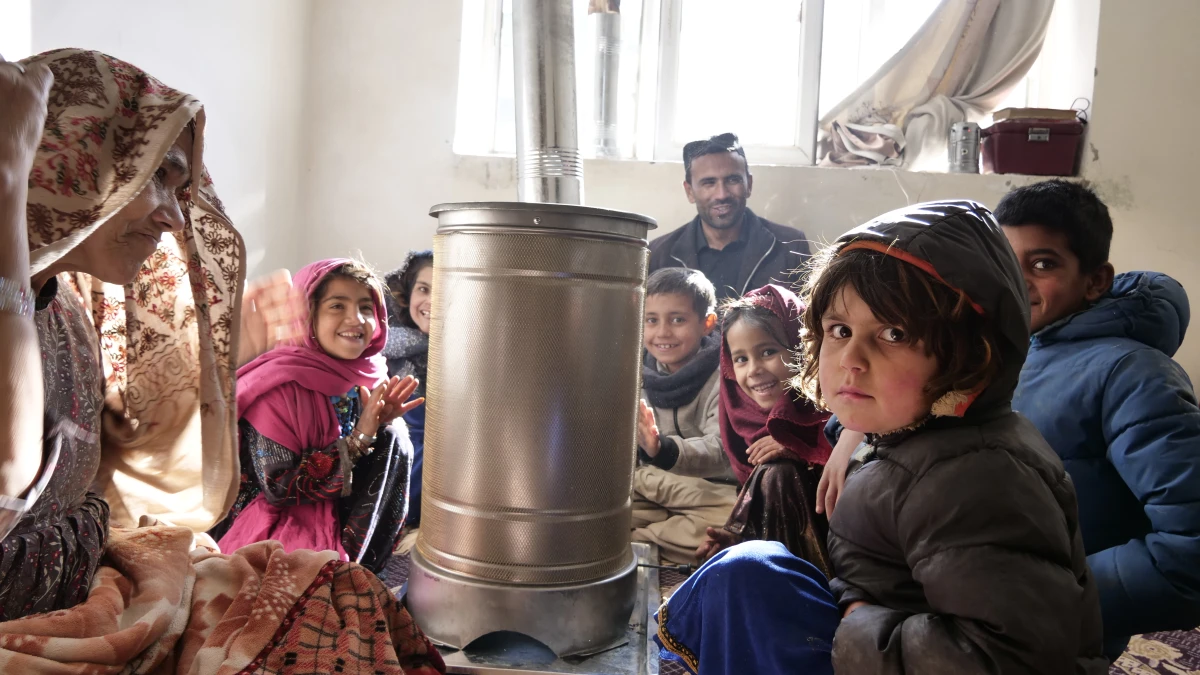
According to UNHCR, over 2 million Afghans have returned from Iran and Pakistan in 2025—many under duress—to a bitter winter and an uncertain future.
Haji Akhtar (70), a returnee living with his family of 11 in the Maidan Shahr returnee camp in Maidan Wardak Province, spent more than half of his life in migration. “I never imagined returning like this,” he says. “We came back with almost nothing, just our family and the clothes on our backs.”
Like many returnee families, Haji Akhtar’s family struggle with cold living conditions, limited access to safe drinking water and sanitation, and no education for their children.
A New Beginning with our Support
To address their urgent needs, we with funding from Stichting Vluchteling (SV), organised an integrated emergency response primarily focussed on returnee families in the Maidan Shahr camp, while also supporting vulnerable host communities nearby. Rather than providing isolated assistance, the project delivers a coordinated package of support, combining cash, winterisation, shelter, Water, Sanitation and Hygiene (WASH), education, and psychosocial support.

This integrated approach helps returnee families meet their urgent needs, stay safe and warm during the harsh winter, maintain their health and dignity, and support their children’s learning and wellbeing.
Since we began working in the camp, families who previously had little or no essential services have received our support. “The support arrived with the first snowfall, exactly when we needed it most,” says Haji Akhtar. “With so little income and a lack of heating, surviving the winter would have been almost impossible.”
Cash Assistance and winterisation kits to survive winter
Through cash assistance, families could prioritise their most pressing winter needs. “I received 19,750 AFN—about $300. With this money, I will buy rice, oil, and beans, and use part of it to cover my medical expenses,” says Haji Akhtar. “Without it, surviving the winter would have been very difficult.”

To protect families from extreme cold we distributed winterisation kits in the camp, these include: blankets, stoves, firewood, and coal. We also provided materials for catch up classes.
Additionally, we carried out a light rehabilitation of returnee camp apartments, replacing broken windows and installing locks; these keep out the cold, improve privacy, and dignity. “They keep our home warm, especially for my grandchildren and for me, as an old man who cannot survive the cold. The kits made a big difference,” says Haji Akhtar.
Drinking Water, Sanitation, and Hygiene
Safe drinking water and sanitation were critical gaps in the returnee camp. We addressed these by installing a solar-powered water system, constructing a water storage tank, and constructing latrines. Hygiene promotion sessions and bio-sand water filters helped families adopt safer practices and reduce health risks.

“PIN constructed water storage so we can fetch water more easily, and the latrines protected our dignity,” says Haji Akhtar. “They also taught us how to prevent illnesses, and use water filters to purify polluted water,” he adds.
Catch-Up Classes Restore Education
As part of our response, we established six catch-up classes for children who had missed years of education due to displacement. Currently, 164 students attend daily—they are now regaining lost learning opportunities.

Parents also meet regularly in psychosocial group sessions. These help them cope with stress, strengthen their parenting skills, and better support their children’s wellbeing. “Education for our children was one of the most important components of support,” says Haji Akhtar.
Reaching Families and Ongoing Support
So far, this integrated response has reached 2,169 individuals, primarily returnees in the Maidan Shahr returnee camp along with vulnerable host community families nearby. These families receive multiple forms of assistance—cash, winterisation, WASH, education, and protection—ensuring their urgent needs are met in an integrated way.

Support continues, including hygiene kits and awareness sessions, help with housing and land and property issues and referrals of vulnerable families to specialized services. “This support helped us in many ways and has truly improved our lives,” concludes Haji Akhtar.


