
Saurav Gautam: His journey to becoming a humanitarian
Published: Aug 18, 2026 Reading time: 5 minutes Share: Share an articleThis World Humanitarian Day, we share the story of Saurav Gautam, PIN Nepal's IT Lead, whose journey into the humanitarian sector has shaped both his career and the person he is today. Saurav is a testament to the fact that being a humanitarian is life-changing for both the people we help and the people doing the helping.
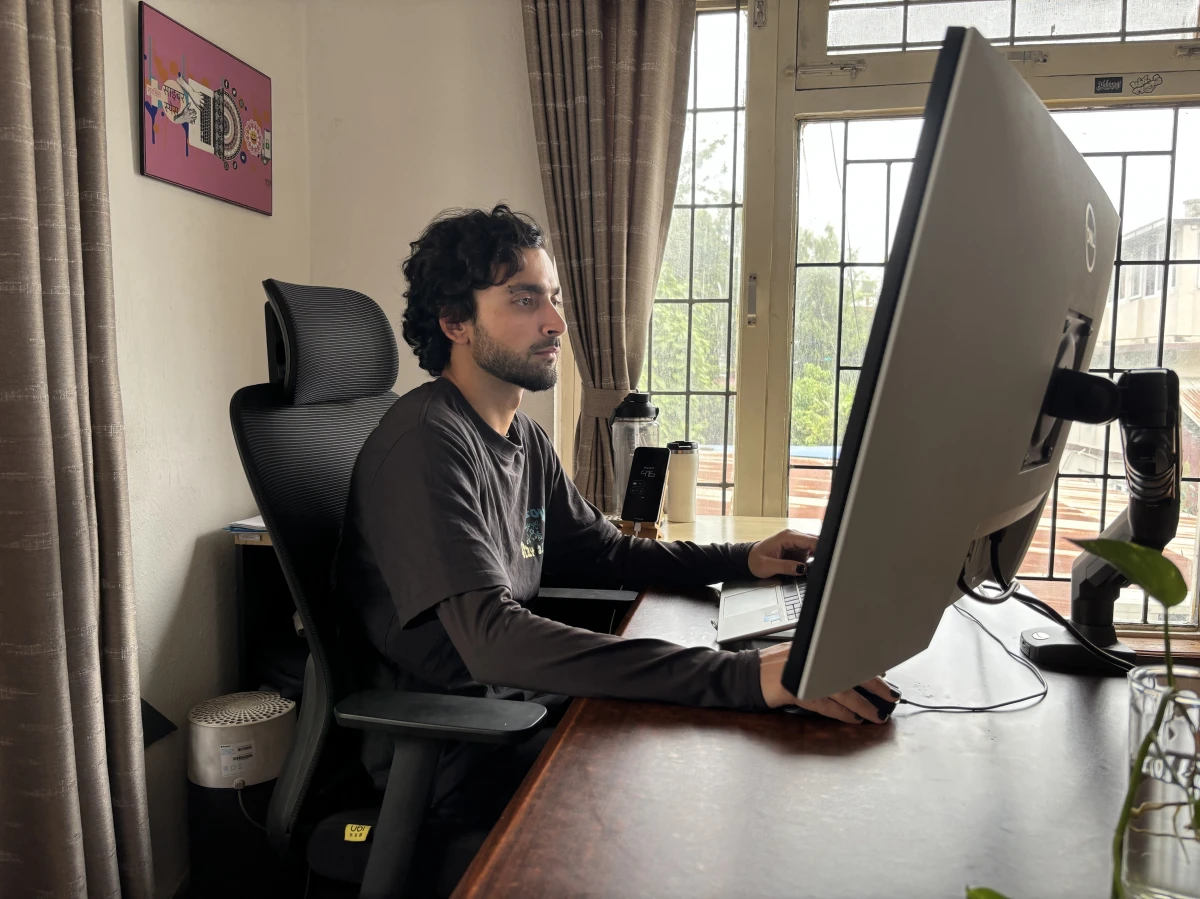
Saurav joined our team in 2017 as a logistics intern for three months. Before that, he worked in technical support, a role very different from the work he does today. Upon leaving his previous job because of its demanding schedule, he came across an opportunity at PIN and applied successfully.
Nine years later, that decision has taken him through procurement, compliance, documentation, field operations, and emergency response, eventually leading him to his current role as IT Lead.
Once aboard, Saurav learned that he enjoyed the processes involved in logistics and learning the ins-and-outs of operations. Moreover, he found himself drawn to the behind-the-scenes processes that make projects possible. For the first few years, he primarily supported teams from the Kathmandu office. Following COVID-19, however, he began taking on more field assignments and became part of our Emergency Response Team (ERT).
When people think about humanitarian work, they often think about the direct connection with communities. But every response relies on concerted operational efforts happening in the background. From transporting supplies and coordinating vendors to finding ways into remote locations, logistics is critical in ensuring assistance reaches those who need it.

One of Saurav's most memorable field experiences took place during a monsoon response in Jajarkot district, where we distributed NFRI (Non-Food Relief Items) and dignity kits to families displaced by heavy rains and landslides.
After a night of heavy rain in Nalgaad, the team encountered a landslide that had washed away nearly 30 metres of road. Vehicles could not pass, and even crossing on foot was perilous. At one point, a colleague tried to clear a path with a shovel, but the damage was too extensive. The team eventually carried the supplies around the landslide and continued their journey.
The challenges did not end there. Damaged roads, transport delays, and no network or internet for contact made the response increasingly difficult. As the team split up to reach a village across a river, Saurav remained behind with part of the relief supplies.
Hours later, he learned that the vehicle sent to collect him had broken down and a tractor had eventually been dispatched instead.
Looking back, he says the experience gave him a deep appreciation for the realities of humanitarian work in remote areas.

Yet for Saurav, the biggest impact of humanitarian work has been personal.
Over the years, exposure to different communities, colleagues, and perspectives challenged many of his assumptions and changed the way he sees the world.
One example is his interaction with the LGBTQI+ community.
She used to go to lunch at the same place he did most days during work. That day he started a conversation with her, and it was eye-opening. This was one of those interactions that he didn’t think he would have if it wasn’t for the exposure to multitudes of social issues he learnt about during his work here. Those conversations pushed him to reflect on issues such as equality and toxic masculinity, both in and outside the workplace.
He also reflects on how much he learned from the women he worked with at PIN.
The lessons he learned through humanitarian work have extended far beyond the office. As a long-time member of Nepal's hardcore music scene, Saurav says these experiences have influenced the way he engages with younger members of the community.

He says he is more willing to challenge discrimination when he encounters it.
Looking back, Saurav believes the experiences, values and lessons he has gained through humanitarian work have become part of who he is, influencing everything from his professional life to the communities he belongs to outside of work.
At the core, the simple experience of being able to help people is what keeps him going in this field even after 9 years. For Saurav, humanitarian work was never part of a grand plan. But it became something much more meaningful than he expected.


