
Africa Day 2026: Sustainable, safe water for all
Published: May 21, 2026 Reading time: 5 minutes Share: Share an articleObserved annually on 25 May, Africa Day commemorates the founding of the Organisation of African Unity in 1963. The day serves to recognise developmental progress across the continent while addressing structural and environmental challenges. This year we reflect on the work of our colleagues across Africa, as they bring life-sustaining water to far-to-reach communities.
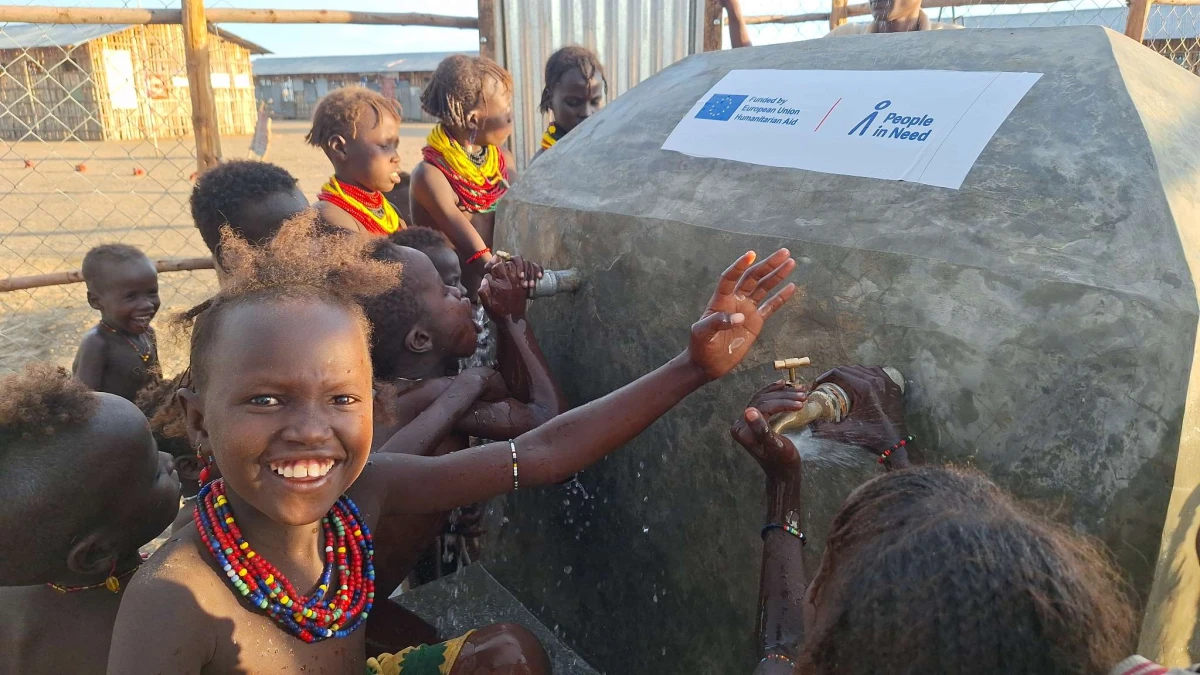
For more than 20 years, we have collaborated with local communities and civil society organisations across Africa to address the challenges faced by countries across the continent. Operating in countries such as Angola, the Democratic Republic of Congo (DRC), Ethiopia, and Zambia, we structure our interventions around three core programmatic pillars: Climate Resilience, Emergency Response and Recovery, and Civil Society and Inclusive Governance. Our work focuses on helping communities to take steps to help themselves.
The 2026 African Union theme: Assuring sustainable water availability and safe sanitation systems
Each year, the African Union (AU) adopts a specific theme to coordinate continental development strategies. For 2026, the AU has designated the theme for 2026 as “Assuring Sustainable Water Availability and Safe Sanitation Systems to Achieve the Goals of Agenda 2063”. This thematic focus directly aligns with our Water, Sanitation, and Hygiene (WASH) programming, which in of itself supports our work in furthering the Sustainable Development Goals (SDGs), particularly Goal 6.
Across the world, climate variability, which often manifests as prolonged droughts in some regions and severe flooding in others, presents a direct challenge to water infrastructure and resource management. Our current WASH operations focus on both adaptation and rapid emergency response to ensure continuous access to safe water, which remains a prerequisite for health, food security, and economic development.
Angola: Resource management through Anticipatory Action
In Southern Angola, recurrent droughts driven by changing climate patterns frequently compromise water sources, impacting agricultural yields and community health. To mitigate these impacts before they reach emergency thresholds, we utilise an anticipatory action framework.
In collaboration with World Vision and supported by the START Network, we repaired 18 water points in the Humpata and Chibia districts prior to the peak of the drought, subsequently rehabilitating an additional 24 water points with CERF funding. These systems include boreholes fitted with solar-powered pumps, storage reservoirs, and tap networks to provide a reliable supply of safe drinking water. To facilitate safe transport and storage, we distributed 4,360 water kits, including jerry cans and buckets, to families. Data from comparative monitoring indicated that households in areas with anticipatory infrastructure maintained more stable food consumption and experienced lower livestock losses during peak drought months compared to areas receiving delayed emergency aid.
Democratic Republic of Congo: Integrating WASH into health and nutrition
In Eastern DRC, communities, face a complex humanitarian situation characterised by localised conflict, population displacement, and seasonal flooding during the rainy season. These factors disrupt traditional water infrastructure, forcing communities to rely on untreated open water sources and raising the prevalence of waterborne illnesses. Our response in integrates WASH infrastructure with healthcare and nutritional support. We rehabilitate broken water points and distribution networks to ensure medical facilities and surrounding communities have access to safe water. This infrastructural support is a critical component in preventing waterborne diseases such as cholera and chronic diarrhoea, which are primary drivers of acute malnutrition among children under five and lactating mothers.
Ethiopia: Capacity building and sustainable infrastructure
We have implemented WASH projects in Ethiopia since 2004, focusing on multi-sectoral sustainability and local ownership. To address the issue of non-functional rural water infrastructure, we ran the "From Skills to Service" project at Durame Polytechnic College, funded by the Czech Development Agency. This initiative trains young technicians in practical electromechanical and water supply maintenance, covering motor repair, solar panel installation, and generator servicing. By establishing local technical capacity, the project ensures long-term system functionality, indirectly supporting reliable water access for an estimated 1.2 million people across central and southern regions. Concurrently, in conflict-affected areas of East Wollega, such as the Gida Ayana and Kiremu districts, our EU-funded RISE (Resilient Inclusive Schooling in Ethiopia) initiative incorporates WASH infrastructure into school rehabilitation. The project provides clean drinking water and renovated sanitation facilities to primary schools, creating safe environments that facilitate the return of children to formal education.
Zambia: Emergency response to climate shocks
Due to changing climactic conditions, Zambia’s farming communities are highly susceptible to acute climate fluctuations. During the 2025–2026 rainy season, intense flooding in the Shangombo District of Western Province submerged nearly 90% of cultivated land and contaminated standard open water sources. Acting as the lead organisation for emergency WASH operations within a multi-NGO consortium coordinated by World Vision UK, we, alongside Plan International and Catholic Relief Services implemented an immediate response. We distributed tailored emergency packages to affected households, providing 20-litre water storage buckets, water purification chlorine, hygiene soaps, and sanitary items. To ensure the effectiveness of the intervention, our community volunteers conducted door-to-door visits to demonstrate proper chlorine dilution and promote handwashing behaviours, aiming to minimise the risk of waterborne disease outbreaks in flooded zones.
Africa Day 2026: Let's remember that water is a local necessity and a global environmental imperative
The water management challenges addressed by our programmes in Africa reflect a broader global challenge. According to the Intergovernmental Panel on Climate Change (IPCC), water is a primary medium through which climate change risks materialise. Approximately 90% of all climate change impacts are related to water—whether through scarcity, excess, or contamination. Disrupted rainfall patterns, depleting groundwater reserves, and infrastructure damage from extreme weather events affect communities across all continents, making water sustainability a global concern rather than a localised regional issue.
However, despite the efforts of our local teams, local partners, and local populations, the scale of this risk is immense. With only 3% of global climate finance currently directed toward water systems worldwide we need global action. Addressing water issues, across Africa and the the wider world, requires a coordinated international shift toward long-term financing, sustainable resource management, and infrastructure development to secure water availability for the future.


