
Cash and livestock: rebuilding stability and hope with Afghan families
Published: Jun 2, 2026 Reading time: 3 minutes Share: Share an articlePeople in Afghanistan have faced years of conflict, economic hardship—with rising prices and limited job opportunities—, and climate-related challenges like droughts and floods. These ongoing challenges continue to push many communities deeper into poverty and placing heavy pressure on families.
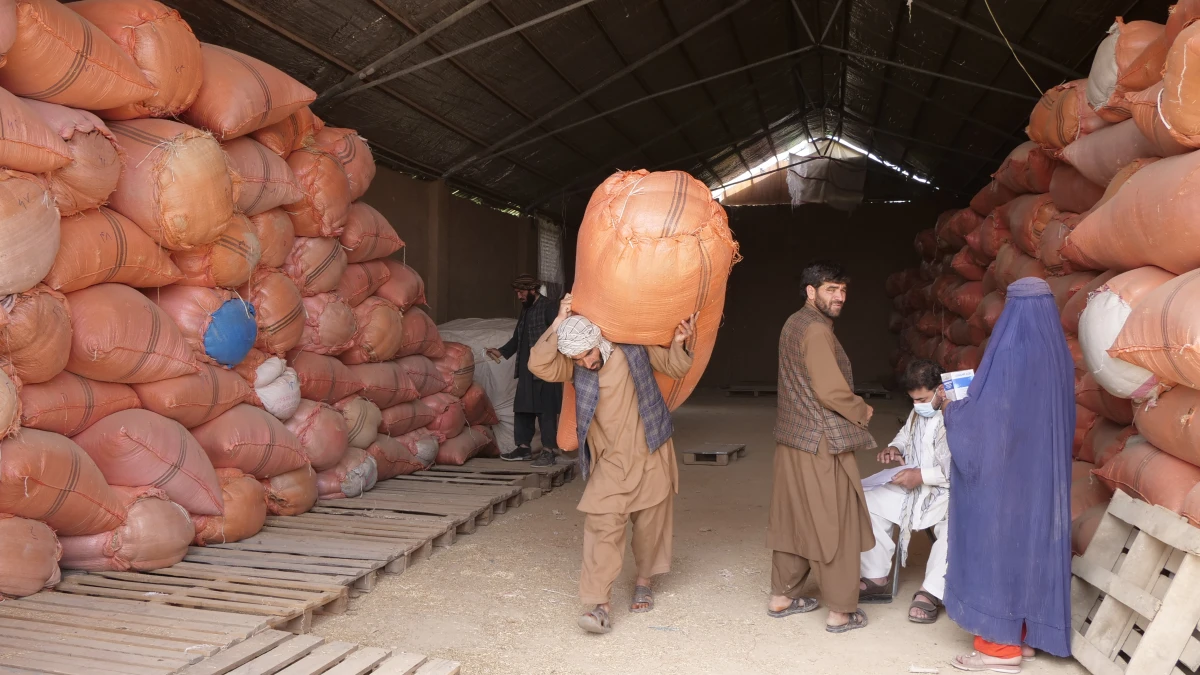
Kubra (50) lives with her six daughters and four sons in a small mud house in Kangori, a village in northern Afghanistan. Her husband works as a day labourer, but his income is irregular. “When we need food, he avoids going to the market because he owes money to many shopkeepers and feels ashamed that he cannot repay them.” To feed her children, Kubra herself takes small loans from neighbours or local shops.
Supporting families through cash and livestock assistance
To respond to growing needs, we are assisting families—with support from the Afghanistan Humanitarian Fund (AHF)—through tailored, needs-based response in Balkh province. We provide some families cash to buy food and meet other needs. While others receive livestock support packages, including animal feed, deworming syrup, and animal health training to help protect and sustain their livelihoods.

Kubra is among 1,570 families (11,226 individuals) receiving cash-for-food assistance through four rounds of distribution. “In the first round, I received 2,830 AFN ($44),” she says. “It felt like someone finally heard us. Now I can buy wheat, rice, and oil. This support has brought some relief to our home.”
Restoring hope for families who depend on livestock rearing
In rural Balkh, many families depend on livestock as their main source of income. For these households, protecting animals means protecting livelihoods. Drought, rising feed prices, and limited veterinary services have made life hard for livestock owners.

Abdul Rahman (45), a father of six, has relied on sheep and goat rearing for many years. “When the animals are healthy, we can sell milk and earn something,” he says. “But when they get sick, we lose both income and sometimes the animals themselves.”

A total of 1,953 families (15,225 individuals) in Charkent, Marmul, and Sholgara districts received livestock support packages, including wheat straw, oilcake, and deworming syrup. “This support helped us keep our animals alive,” Abdul Rahman says. “Now we believe they will get stronger, and we are getting milk again. Without this help, we could have lost most of our animals.”
In addition, more than 72,500 animals were dewormed through our deworming campaigns. “After they dewormed my animals, they became healthier,” he adds. “It has made a big difference during this difficult time.”

The tailored assistance also included training sessions on animal health, feeding practices, and disease prevention. “Now we know how to prevent diseases and keep our animals healthier,” he says. “This knowledge is very important for us because it helps us improve our livelihoods.”
Helping families regain a sense of stability, dignity, and hope
For families like Kubra’s and Abdul Rahman’s, this support has brought some relief during a difficult time. Cash support is helping households buy food and meet urgent needs, while livestock support and animal health services are helping families protect their animals and improve their livelihoods. In communities facing poverty, drought, and uncertainty, this assistance is helping families rebuild their sense of stability, dignity, and hope.


